
‘Bionic’ Pacemaker May Reverse Heart Failure By Imitating Natural Rhythm & Pace
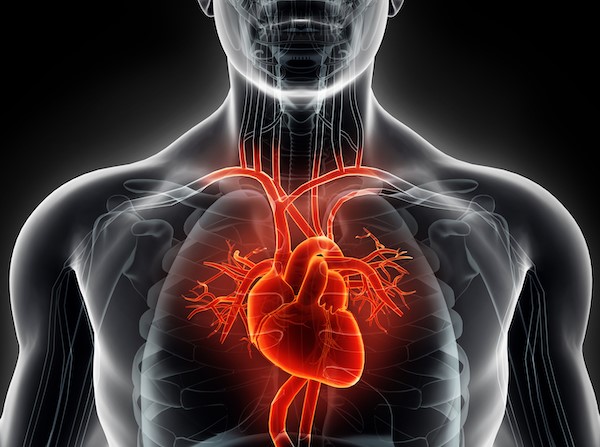
Pacemakers are often used in patients with heart arrhythmias, or irregular heartbeat patterns. These small devices are implanted in the chest to help control and regulate the heartbeat to ensure that the patient’s heart doesn’t beat too slowly.
However, one drawback is that the conventional pacemaker often makes sure that the heart beats a little too regularly. The human heart naturally fluctuates, which is what researchers at the University of Auckland, New Zealand, are out to replicate.
“If you analyze the frequencies within your heart rate, you find the heart rate is coupled to your breathing,” explains lead researcher Professor Julian Paton. “It goes up on inspiration, and it goes down on expiration, and that is a natural phenomenon in all animals and humans.”
Described to be “almost” like a bionic device, the device “understands” the body’s signals to indicate breathing in or out. Then, the device communicates back to the body to adjust the heart’s pace accordingly.
This research has been published in the journal Basic Research in Cardiology.
The new pacemaker, apart from creating a more efficient rhythm for patients’ hearts, has also been revealed to reverse heart failure. “We decided that we would put the heart rate variability back into animals with heart failure and see if it did anything good,” Paton states.
An irregular heartbeat is representative of a healthy heart, and the loss of this rhythm is a “near-universal” symptom in heart failure or high blood pressure patients that something is wrong, per Study Finds.
However, medications “don’t address the issue that you’ve got damaged tissue that’s not contracting as efficiently as it was,” explains Dr Julia Shanks, a research fellow involved in the study.
“Our new pacemaker brings back this variability, which of course is natural, in a way you could call it ‘nature’s pacemaker.’”
So far, it has yielded some extremely promising results with positive signals in rats. Next, researchers plan to recruit human patients in a trial that will commence in New Zealand later this year.
[via Medical Xpress and Study Finds, image via Shutterstock]


