
Marcel Duchamp’s Life Celebrated In All Forms With Collaborative Online Archive
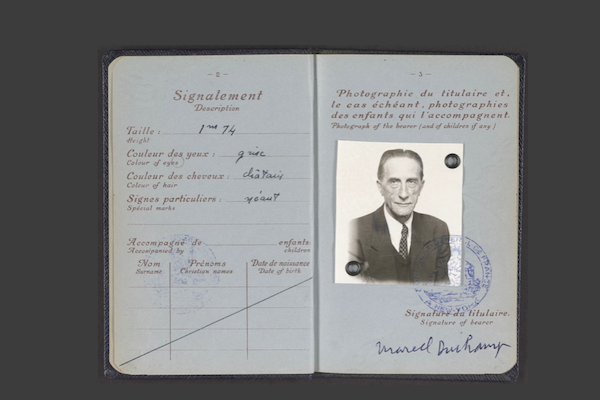
The eccentric French artist Marcel Duchamp has gotten his own online archive thanks to a collaboration between the Philadelphia Museum of Art (PMA), the Parisian Centre Pompidou, and the Association Marcel Duchamp.
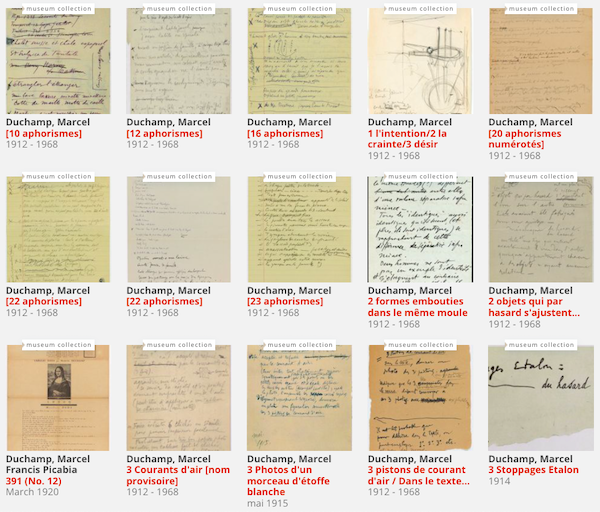
Free to access, the Duchamp Research Portal consists of 18,000 documents, letters, and artworks, as well as almost 50,000 digitized images relating to Duchamp’s life, and his works, according to a press release.
These also include his network and connections within the Cubism and Dada communities, documenting friendships with the likes of Salvador Dalí and Florine Stettheimer.
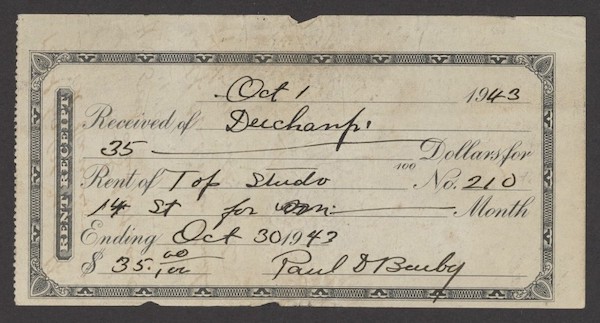
Some of the personal papers that are in the archive include documents such as Duchamp’s French passport; the license from his first marriage in 1927; photographs of him dressed as his female alter ego Rrose Sélavy; and even some childhood photographs, as reported by the Smithsonian.
Visitors to the site are encouraged to “hop around” and experiment with keyword searches, Matthew Affron, curator at the PMA, says. The archive “can be an incredibly granular level of detail,” he tells the Philadelphia Inquirer.
Apart from being a prolific artist, Duchamp was also a chess aficionado, having even built his own board and written a book on the game. This is shown in the handwritten records of a chess game between the artists Duchamp and Man Ray, included in the archive.
“Through making these archives accessible globally, we hope that Marcel Duchamp’s idea of freedom will inspire visitors to the site and that they will remember that the artist’s life and art were one, constantly redefining borders of all kinds,” states Antoine Monnier, Director of the Association Marcel Duchamp.
Marcel Duchamp was born on this day in 1887. An artist who broke down the boundaries between works of art and everyday objects, he is perhaps best known for his irreverent “readymades.” One of the best examples of a readymade is “Fountain.” https://t.co/n1ZKNqthJQ pic.twitter.com/GM4nI1yMWE
— Philadelphia Museum of Art (@philamuseum) July 28, 2021
[via the Smithsonian and the Philadelphia Museum, image via Duchamp Research Portal]


