
Harvard Tech 3D-Prints Kidney Tissues To Prevent Failure, Grow For Transplants
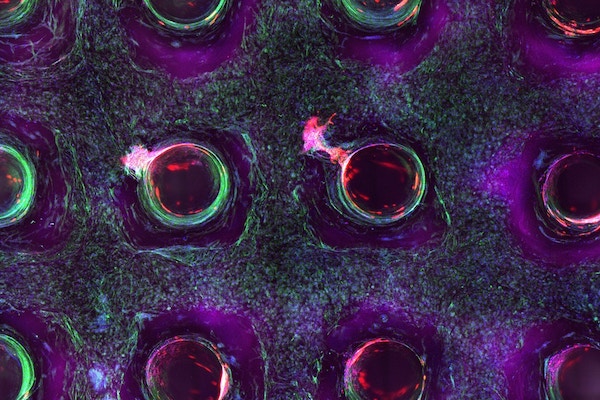
Trestle Biotherapeutics, a bioengineering startup, announced Tuesday that the company haslicensed research and innovation from Harvard University’s Wyss Institute to develop 3D-printed tissue that can be used to supplement human organs.
This new approach, coined by the labs of Wyss Institute scientists Jennifer Lewis and Ryuji Morizane, is said to be a hybrid of stem cell and biofabrication tech, which essentially allows for the “regeneration” of tissue. Trestle states that it’s planning to use this new tech to create kidney cell transplants.
Upon success, this will be able to get patients off dialysis, and, eventually, it’s also hoped that the process will be able to create full kidneys that have the potential to save countless lives.
“Patients living with kidney failure have had the same two standard-of-care treatment options for more than 60 years,” Ben Shepherd, co-founder and CEO of Trestle, points out. It has always either been dialysis or transplant.
Kidney transplants can be life-saving procedures, but the process of acquiring a new organ is not simple or predictable. It has been noted that the average wait time for a kidney in the US is five years, and some patients don’t have that luxury of waiting time.
Wyss Institute has shared a bit about the research thus far, stating that the created soft tissue can be “immediately perfused with nutrients as well as growth and differentiation factors.”
Plus, a previous study using the 3D-printed tissue containing bone marrow indicated that it allowed “the circulation of bone growth factors and, subsequently, the induction of bone development.”
[via 3D Printing Industry and Trestle Biotherapeutics, image via the Wyss Institute]


