
Artificial Fish Comes ‘Alive’ Swimming With Human Heart Muscle
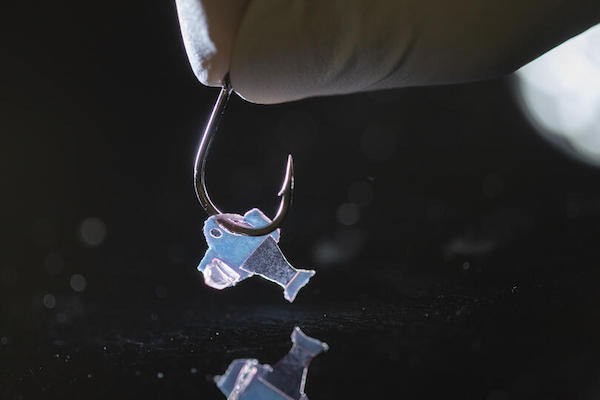
Gills aren’t the part that facilitates life in these “biohybrid fish”—the bots are swimming thanks to human heart muscle cells.
The model’s body is a simple construction of paper, plastic, and gelatin. All it takes are two strips of living, lab-grown heart muscle cells, lining both sides, to get it moving for months. This autonomous feat spells good news for the endurance of an artificial heart in the human body.
The team of scientists behind the breakthrough—including Keel Yong Lee and Kevin Kit Parker from Harvard and Sung-Jin Park of Emory University and Georgia Tech—had first placed some robotic fish with the muscle cells in an incubator and “forgot about them,” NPR reports. When they checked in, “all the fish were swimming by themselves” with the help of a diet of nutrients in the water, Park noted. The researchers published their findings in a peer-reviewed paper in the Science journal.
The biohybrid fish, whose form is inspired by the zebrafish, swam for three-and-a-half months, or 108 days, before the team stopped the project.
Going back to the heart muscles in the artificial fish body: As one side contracted, the cells pushed the tail into that direction, propelling movement. At the same time, the other side stretched, triggering the swimming motion.
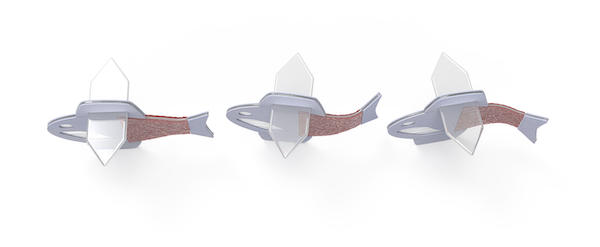
Robotic fish were selected as the vessels for lab-grown heart cells, as swimming in water kind of resembles the pumping motion and rhythm of the heart in the body.
The experiment does have its implications on land—it proves that human heart tissue can be simulated in a lab to realistically replace real heart cells that have been killed by inflammation or disease.
Throughout its lifetime, the human body cannot grow new heart muscle cells. It lives with the same set received from birth. “Once you’re born, about two days after you leave the womb, the number of cardiac muscle cells you have then is all you're going to have for the rest of your life,” explained Parker.
Saying goodbye to the fish was bittersweet for the researchers. “We have a kind of emotional attachment to the fish,” Park reflected, via NPR.
Parker, however, said that this test is just a “training exercise” for a broader humanitarian purpose. “Ultimately, I want to build a heart for a sick kid.”
[via Motherboard and NPR, images via Harvard John A. Paulson School of Engineering and Applied Sciences]


