
Scientists Might Now Know To Make Organs ‘Universal’ To Match All Recipients
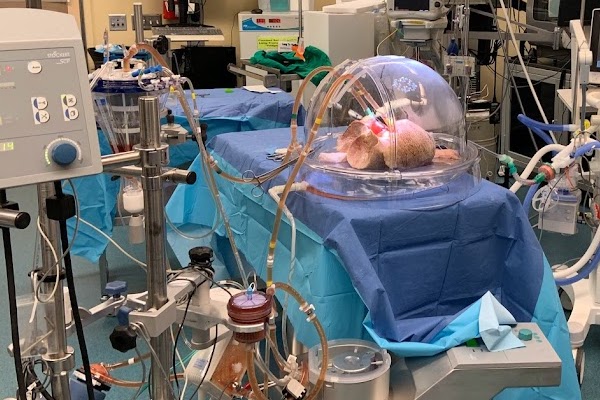
In transplants, organ size and blood type are usually the main factors in matching organ donors and recipients to reduce the risk of an organ being rejected by the recipient.
However, this could mean that someone who desperately needs an organ transplant cannot have the procedure carried out until a suitable one is found.
This solution may just be on the horizon thanks to scientists from Canada. As outlined in a study published in Science Translational Medicine, they’ve managed to convert donated lungs into “universal” organs, making them suitable for any recipient as long as the size is right.
For context, people with Type O blood can donate to anyone, as the type means that the blood doesn't contain antigens that trigger others’ immune systems and cause rejection, per Gizmodo. In addition, people with Type AB blood can receive organs from anyone else as they contain both A and B antigens.
The scientists have known that combining two enzymes—FpGalNAc deacetylase and FpGalactosaminidase—could “convert” Type A blood into Type O by removing its antigens. This was tested out in donors' lungs, applying the enzymes for four hours.
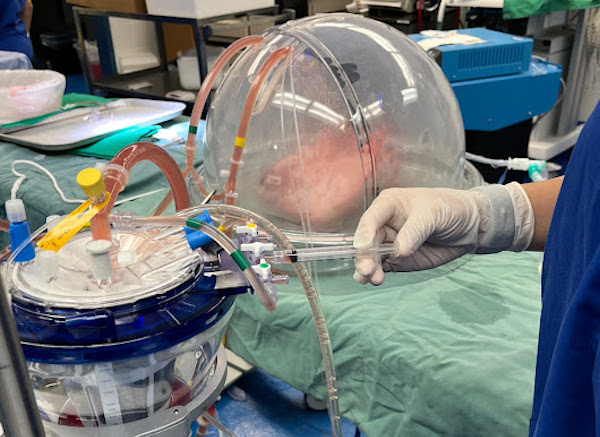
Just that short amount of time yielded promising results: Up to 97% of the A antigens were removed from the lungs, minimizing the chances of “hyperacute rejection.”
When compared to sample lungs that weren’t treated, the enzyme-doused organs “performed perfectly well,” study author Marcelo Cypel, a professor at the University of Toronto, tells Live Science. However, the untreated lungs showed signs of hyperacute rejection “quite quickly.”
This process, according to Cypel, would be able to be carried out in any donated organ, not only in lungs.
“Having universal organs means we could eliminate the blood-matching barrier and prioritize patients by medical urgency, saving more lives and wasting less organs,” he details in a press release.
Because the first sample size this process was tested on is relatively small, results are yet to be further confirmed. The team is hoping to take this to clinical trials within the next 12 to 18 months.
https://t.co/G7cZJ9ET5s. What if blood type could no longer be a consideration for organ allocation in transplantation? This is the proof of concept that Universal Blood Type Lungs can be created. @UHNTransplant @UHN @UHN_Research @bradwouters @SKeshavjee @ishlt
— Marcelo Cypel (@MarceloCypel) February 16, 2022
[via Gizmodo and Live Science, image via the University Health Network]


