
3D-Printed, Liver-Like Objects Can Detoxify Themselves, Just Like Human Ones
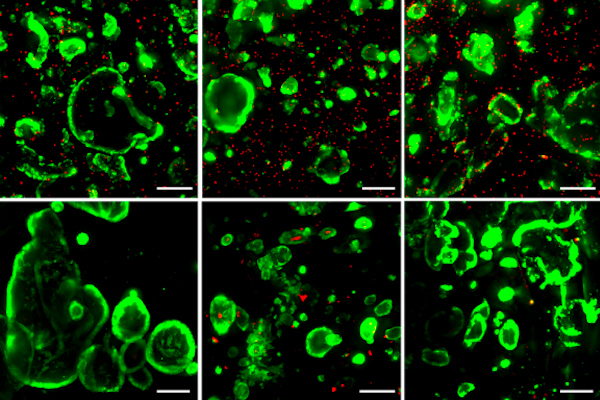
Scientists from Utrecht University in the Netherlands have been investigating the possibility of biofabricating, or 3D-printing, functional liver units on a large scale.
These are reportedly capable of detoxifying impurities, which is one of the main functions of the human liver, despite being just a fraction of its size.
Instead of using the conventional method of 3D printing, which requires a nozzle, the team used light tomography to create these miniature “organs,” detailed by Notebookcheck.
A pattern is projected over vessels containing photosensitive hydrogels and liver-mimicking stem cells—also known as organoids—inside. A common contrast material, iodixanol, made the cells transparent, which allowed the light pattern to penetrate the material, and modify and arrange the organoids.
Making the cells transparent in this way eliminates the usual risk of a high concentration of cells scattering light, which would have previously reduced the quality of printing or made it impossible.
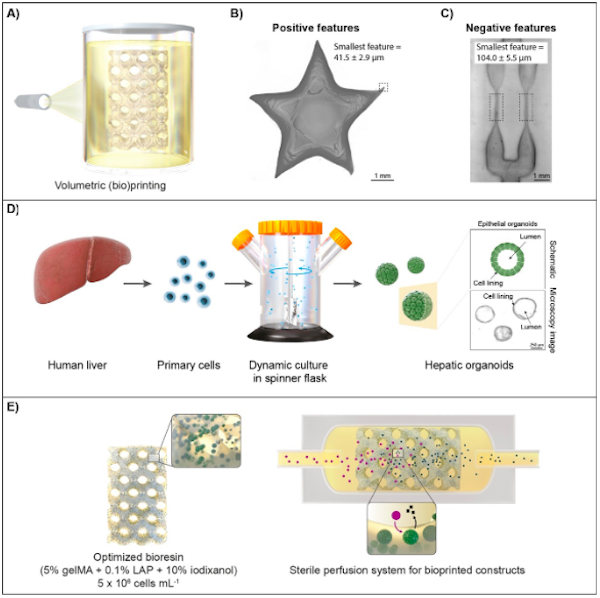
Apart from reducing the risk of damage or undue pressure on the cells, this method is also much faster than regular nozzle printing, which meant that the team was able to create 12 liver-like units in just 180 seconds.
Drug-induced liver injury in humans is, according to a press release from the university dating to 2018, the “most common adverse drug reaction.” These may cause acute liver failure, with an estimated 15% of liver transplants required after acute liver failure being linked back to drug-induced liver injuries.
This new process can be used to mitigate this risk, replacing the current, and at times inaccurate, in-vitro and animal models that are being used to study this currently.
It can also be used in regenerative medicine, as well as being able to develop new models of studying new drugs for liver disease. Plus, the light-based printing method can be extended to other fields, such as printing ceramic or metal nanoparticles.
The study demonstrating the research was published in the journal Advanced Materials last week.
[via 3D Printing Media Network and Notebookcheck, image via Utrecht University]


