
Scientists Discover New Way To Use Sound Waves To Help Regrow Bones
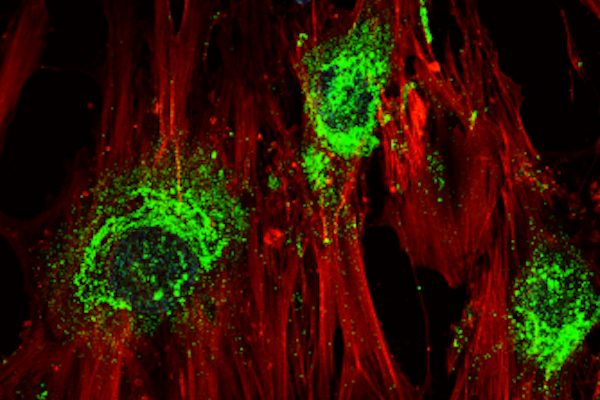
Researchers from the RMIT University in Australia have successfully used sound waves to turn stem cells into bone cells, a new method in tissue engineering that could eventually help patients regrow bones.
According to the university, tissue engineering is a pioneering field of study that looks into ways to rebuild bone and muscle by using the body’s ability to heal itself, such as with its own stem cells and bone cells.
However, the key to unlocking that lies in figuring out how to grow a large amount of bone cells to be implanted into the targeted area, which has been difficult to scale to mass production due to expensive equipment and complicated procedures.
Furthermore, other clinical trials for regrowing bones involved a painful method of extracting stem cells from a patient’s bone marrow.
Now, the RMIT team has come up with a more efficient and effective plan: using high-frequency sound waves. Not only is this a quicker method, but it is also less painful for the patient as it uses fat-derived stem cells that don’t require extraction from bone marrow.
“The sound waves cut the treatment time usually required to get stem cells to begin to turn into bone cells by several days,” explained Dr Amy Gelmi, a Vice-Chancellor’s Research Fellow at RMIT.
“This method also doesn’t require any special ‘bone-inducing’ drugs and it’s very easy to apply to the stem cells,” she added.
Co-lead researcher Distinguished Professor Leslie Yeo said that the team spent more than 10 years researching how sound waves above 10MHz interact with different materials before developing the wave-generating device.
Notably, it can be used to manipulate cells, fluids, or materials in specific places, “to apply just the right amount of pressure in the right places to the stem cells, to trigger the change process.”
Going forward, the team will look into ways to scale the technology for mass use and work towards creating practical bioreactors to assist with stem cell differentiation.
“Our device is cheap and simple to use, so could easily be upscaled for treating large numbers of cells simultaneously—vital for effective tissue engineering,” Yeo remarked.


