
There’s A School That Teaches AI To Drive, Established By AI
Human drivers go to school and sit examinations and driving tests, but how do autonomous driving systems learn?
Driving might feel like second nature to some, but it’s still a complex process that requires lots of nuances and quick reaction times alongside the ability to handle a situation appropriately no matter how suddenly it occurs.
That’s why autonomous driving has been so heavily scrutinized in its development stages, with numerous safety concerns raised by authorities. Hence the slow progress, with many self-driving tests remaining, still, in the pilot stage.
Waabi is a startup created to speed this process up, with founder Raquel Urtasun describing her frustration with the pace of the industry. Waabi World, the firm’s own virtual simulator, is essentially a driving school for AI.
But this is done without cars.
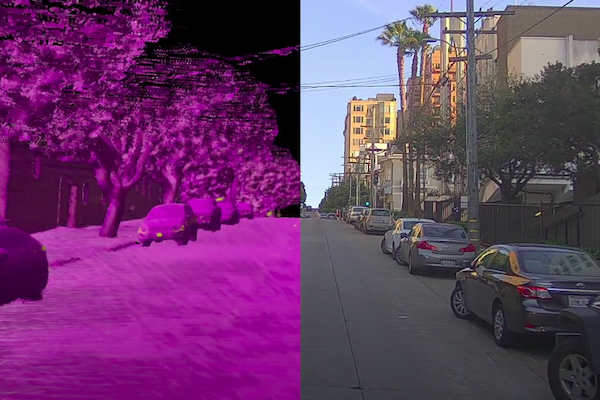
Creating “digital twins” of the real world through camera images and LiDAR data, Waabi World trains AI drivers inside the simulation instead of having them drive real cars on real roads. Only when the AI can pass the final finetune test can it be unleashed onto the road.
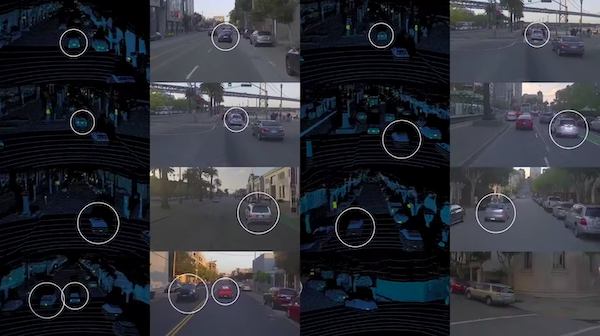
“Other sims use human-designed models,” Urtasun tells FreightWaves. “It is very expensive to create those worlds. We utilize AI to automatically recognize and create digital twins of everywhere the sensors [have been].”
Additionally, the tech means that the AI drivers are actively learning, all the time, speeding things up. “When self-driving vehicles are testing on the road, they are not learning anything,” Urtasun states.
“If they see the same scenario 30 minutes later, they would behave the same way. This is not how humans act in the world. In Waabi World, every time we experience a scenario, we are able to provide feedback to the Waabi Driver to handle the scenario better the next time. The more [experience you generate] the more it learns.”
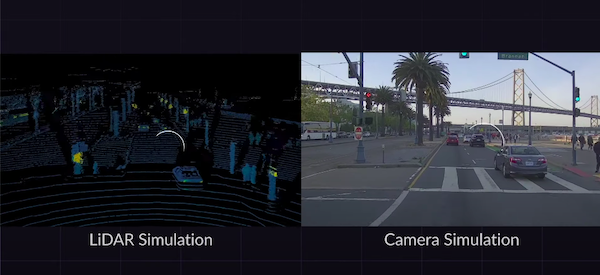
Worlds and scenarios can be modified “by removing, adding, or changing the behavior of “actors” (including the Waabi Driver) in scenarios and re-simulating the sensors in near real-time,” a Waabi blog post explains.
In contrast, most systems need vast amounts of real-world data in order to generate complex scenarios to train drivers with, which is another factor that slows progress.
With these endless scenarios, AI drivers can be trained in perplexing situations and enhance their skills even further.
[via MIT Technology Review and FreightWaves, images via Waabi World]


