
5,300-Year-Old Skull Shows Evidence Of Earliest-Known (& Successful) Ear Surgery
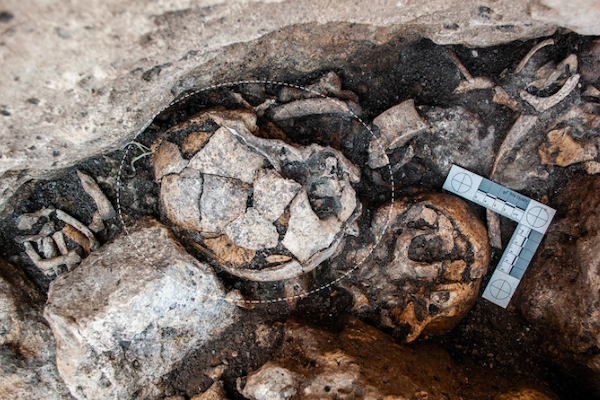
Around 5,300 years ago, an elderly woman in northern Spain underwent what appears to be the first known ear surgery in an effort to relieve pain in the area.
A skull found in a large tomb by the name of the Dolmen of El Pendón in Burgos, Spain, shows evidence of two different procedures, as reported by Smithsonian Magazine.
Archaeologists state that it was likely the first was done on the right ear, perhaps to treat an infection. The second took place on the left ear. Bone growth around the areas show that the woman survived both surgeries by at least a full month.
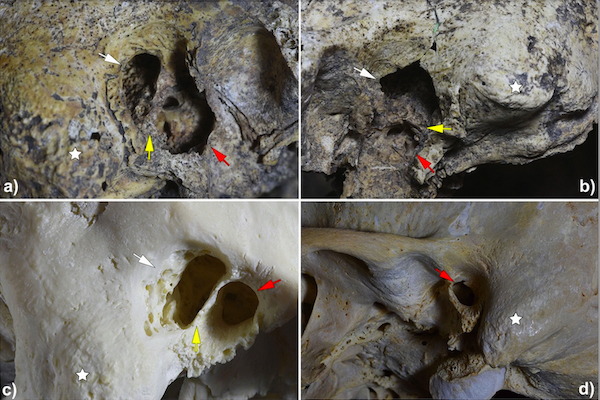
“The prehistoric surgeon located the focus of the problem—probably because the infection was evident to the naked eye—and successfully intervened, as proven by the bone regeneration observed in both mastoid bones,” the researchers write in the study published in Scientific Reports.
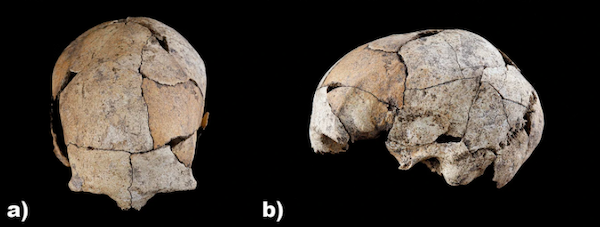
The Independent notes that from where the cuts were made into the skull, it was likely the patient underwent a mastoidectomy, which is a procedure aiming to treat infected mastoid bones, which are just behind the ear.
Left untreated, the infection could have spread to the bones’ air pockets. This would have meant the bones would be filled with infected material, possibly threatening the person’s life with things like blood clots.
Alongside the skull, researchers also discovered a flint blade that was revealed to have traces of cut bone. This item might have been the surgical instrument used to save the patient’s life all those years ago.
[via Smithsonian Magazine and the Independent, images via Rojo-Guerra et. al / Scientific Reports]


