
Scientists Hit Breakthrough By Reversing Signs Of Aging In Mice
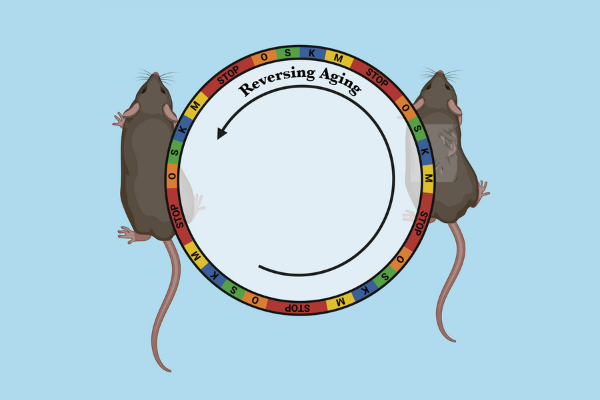
Researchers at Salk Institute have achieved an incredible scientific breakthrough by successfully reversing the aging process in middle-aged and elderly mice.
By using reprogramming molecules—known as “Yamanaka factors”—to partially reset the mice’s cells into “more youthful states,” the scientists were able to turn adult cells, in terms of development, back into stem cells.
“We are elated that we can use this approach across the life span to slow down aging in normal animals. The technique is both safe and effective in mice,” said Juan Carlos Izpisua Belmonte, Professor at Salk’s Gene Expression Laboratory.
“In addition to tackling age-related diseases, this approach may provide the biomedical community with a new tool to restore tissue and organismal health by improving cell function and resilience in different disease situations, such as neurodegenerative diseases,” he added.
The new study saw the team test variations of the cellular rejuvenation approach in healthy mice as they aged. One group of mice were given regular doses of the Yamanaka factors from the age of 15 months to 22 months, which would range between ages 50 and 70 in human years.
Next, a separate group went through the process from 12 months to 22 months, equivalent to ages 35 to 70 for humans. Finally, a third group was treated just for one month at age 25 months, which would translate to age 80 in humans.
“What we really wanted to establish was that using this approach for a longer time span is safe. Indeed, we did not see any negative effects on the health, behavior, or body weight of these animals,” summed up Pradeep Reddy, a Salk staff scientist.
The team found the animals that underwent treatment resembled their younger counterparts in areas such as kidney and skin patterns.
Furthermore, the skin cells of the test subjects regenerated more quickly when injured, and their body’s metabolic molecules did not display age-related changes.
Going forward, the scientists want to analyze how specific molecules are changed by the long-term treatment plans, as the results were seen only in the mice treated over a longer period of time, and not those with the one-month doses.
“At the end of the day, we want to bring resilience and function back to older cells so they are more resistant to stress, injury and disease,” said Reddy.
[via Interesting Engineering and Salk Institute, cover image via Salk Institute]


