
8,000-Year-Old Skeletons From Portugal Could Be World’s Oldest Mummies
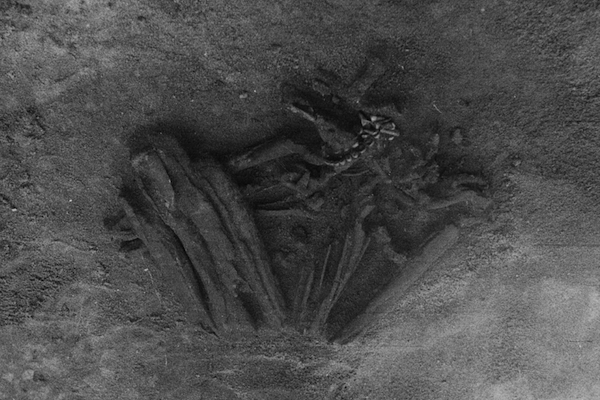
Human skeletons unearthed in Portugal’s Sado Valley could be the world’s oldest mummies, as researchers from Uppsala University, Linnaeus University, and the University of Lisbon have determined the bodies are over 8,000 years old.
Previously, the record belonged to the Chinchorro mummies found in Chile, which were preserved by hunter-gatherers 7,000 years ago.
This time, scientists managed to reconstruct the burial positions of the mummies from photographs taken when the 13 bodies were first exhumed in the 1960s, gaining insight to rituals used by the European Mesolithic peoples to bury their dead.
As Nature World News pointed out, the Sado Valley findings are no longer considered “mummified” as the soft tissue has decomposed and the bodies are left skeletonized, making it more difficult for researchers to investigate which preservation methods were used.
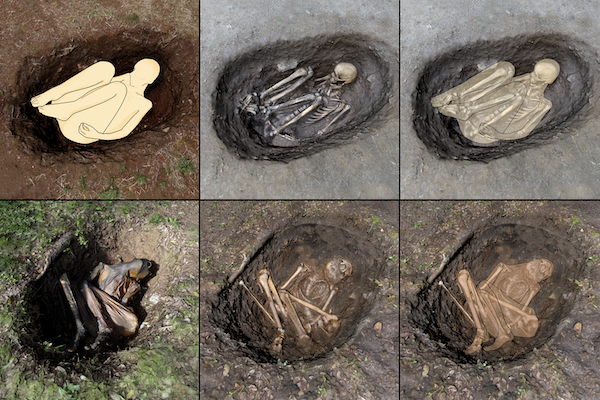
According to Artnet News, the team used a method called archaeothanatology to analyze the samples, with reference to experiments conducted by the Forensic Anthropology Research Facility at Texas State University to better identify signs of preservation.
It appears the people of the time had used ropes to bind the limbs of the dead in place, positioning them in particular fashions. This could be for ease of transporting the bodies to the grave, or for the deceased to retain the shape of their bodies in the afterlife.
Given that most of the world’s mummies are younger than 4,000 years old, and the practice is thought to have begun in ancient Egypt over 5,700 years ago, the discovery of these 8,000-year-old skeletons certainly allude that other cultures could have preserved their dead for far longer than once thought.
[via Nature World News and Artnet News, images via European Journal of Archaeology]


