
Strong, Shock-Absorbing Material Is As Durable As Metal, Light As Foam
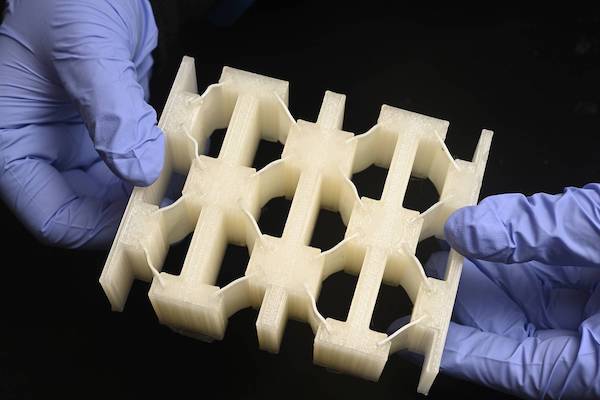
Scientists at Johns Hopkins University have created a shock-absorbing material that’s not only as strong as metal, but is as lightweight as foam.
This new, reusable material could be used to create the next generation of helmets, body armor, or even automobile and aerospace parts.
According to New Atlas, the researchers are now working with a firm to design helmets and protective gear for athletes and military use.
“The material offers more protection from a wide range of impacts, but being lighter could reduce fuel consumption and the environmental impact of vehicles while being more comfortable for protective gear wearers,” explained Sung Hoon Kang, senior author of the study.
Kang had come up with the idea for a better, more energy-absorbing material when he noticed that typical helmets and car bumpers didn’t perform as well at higher speeds of contact, and weren’t environmentally friendly.
To develop a new entity that would be better able to withstand impact, the team turned to liquid crystal elastomers (LCEs), a high-energy-absorbing component that’s been used in the robotics sector.
During tests, the material was able to absorb impact from objects between four and 15 pounds traveling at up to 22 miles per hour.
While the speed of the experiments was limited due to the machines used, the team feels its padding could withstand even greater hits.
“We are excited about our findings on the extreme energy absorption capability of the new material,” said Kang.
[via New Atlas and Johns Hopkins University, cover image via Johns Hopkins University]


