
Microscopic Ocean Critter That’s A Natural ‘Weapon’ Against Carbon Discovered
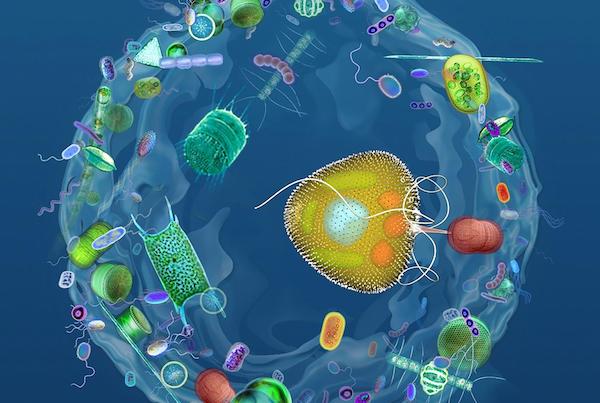
Researchers at the University of Technology Sydney, Australia, have recently uncovered a new, minute marine predator that naturally sequesters carbon.
The single-cell microbe could be “a secret weapon in the battle against climate change,” said the team, with plans that it could be cultivated to offset carbon emissions.
According to Sky News, through photosynthesis, the critter secretes a carbon-rich mucus that attracts and traps other organisms. It then eats some of the other microbes before leaving the carbon-rich mucus to sink to the bottom of the ocean as a kind of “natural carbon pump.”
Marine biologist Dr Michaela Larsson, lead author of the study, said that scientists had never chanced upon such behavior in the past. Most marine microbes that photosynthesize usually make use of nutrients dissolved in seawater to grow.
“However, our study organism, Prorocentrum cf balticum, is a mixotroph, so it is also able to eat other microbes for a concentrated hit of nutrients, like taking a multivitamin,” explained Larsson.
Overall, it’s estimated the species—which thrives off the coast of Sydney—can sink up to 0.15 gigaton of carbon annually.
“The implication is that there’s potentially more carbon sinking in the ocean than we currently think, and that there is perhaps greater potential for the ocean to capture more carbon naturally through this process,” said Professor Martina Doblin.
“This could be a game-changer in the way we think about carbon and the way it moves in the marine environment,” she added.
[via Sky News and University of Technology Sydney, cover image via Larsson et al. (2022)/Glynn Gorick]


