
NASA Confirms The Existence Of 5,000 Planets Outside Our Solar System
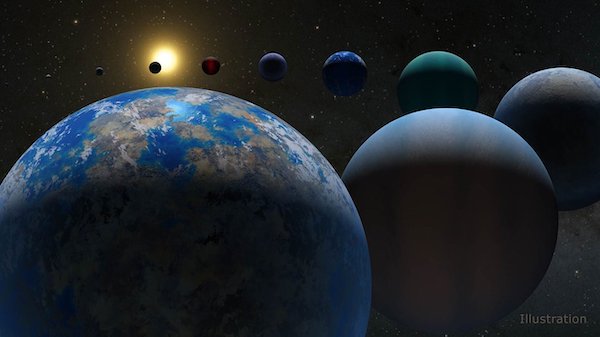
NASA’s Jet Propulsion Laboratory has officially confirmed it has found over 5,000 known planets beyond our solar system.
The agency reached the milestone earlier this week with the latest discovery of 65 exoplanets. These discoveries have been peer-reviewed, featured in scientific papers, and confirmed via multiple detection systems.
Among the 5,000 planets found this far are small, rocky plains similar to that of Earth, gas giants even larger than Jupiter, and “hot Jupiters” that revolve in extremely close orbits around a star.
Furthermore, there are “super-Earths” bigger than our own planet, and “mini-Neptunes” that are smaller in size than their namesake.
“It’s not just a number,” said Jessie Christiansen, Research Scientists at the NASA Expolanet Science Institute.
“Each one of them is a new world, a brand-new planet. I get excited about every one because we don’t know anything about them.”
In total, NASA estimates there are hundreds of billions of such planets in our galaxy, with more discoveries bound to happen in the future. Could this mean we’ll eventually find signs of other life?
“To my thinking, it is inevitable that we’ll find some kind of life somewhere—most likely of some primitive kind,” posited Alexander Wolszczan, lead author of a study that first discovered exoplanets in 1992.


