
Smart Bandage Medicates At ‘The Right Moment’ When It Detects An Infection
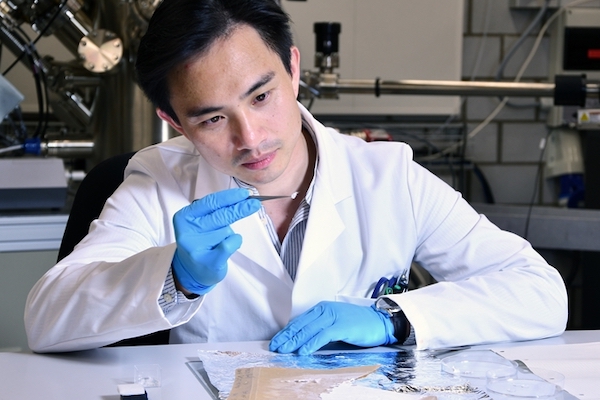
Scientists at Switzerland’s Empa research center have created a smart bandage that releases medication into an injury as soon as it detects the start of an infection.
This isn’t the first time researchers have come up with a dressing that dispenses medication. As New Atlas noted, a team from Tufts University has worked on a similar idea, though theirs makes use of an electronic sensor instead.
At Empa, the idea came about after researchers noticed that because we aren’t able to tell from outside a bandage if a wound needs treatment, we often apply ointments or antibiotics on it before applying the dressing.
However, at times—even for the most clumsy folk—these medications aren’t necessary, leading to waste and over-treatment of minor wounds.
Not to mention, the overuse of antibiotics could result in multi-resistant bacteria, which the World Health Organization (WHO) lists as “one of the biggest threats to global health” today.
When bacteria becomes more antibiotic-resistant, it becomes more difficult to treat future illnesses, leading to increased medical costs, longer hospital stays, and even a higher threat of mortality.
As such, the team set out to design a bandage that would react to the rise in temperature when a wound gets infected, allowing it to dispense medication “at exactly the right moment.”
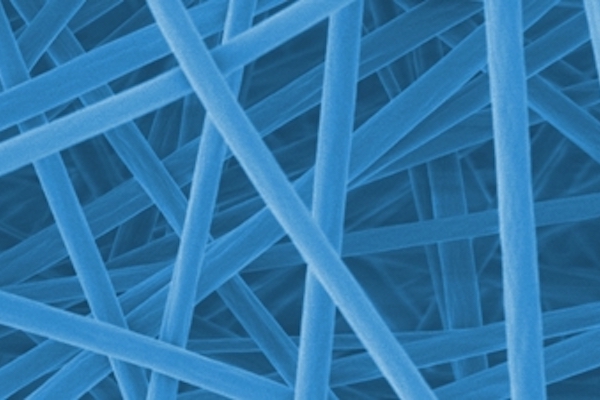
Together, the researchers developed a skin-compatible polymer composite comprising of acrylic glass (polymathy methacrylate, or PMMA) and Eudragit, a biocompatible polymer that’s typically used to coat pills.
Using electrospinning, the polymer mixture was weaved into a fine membrane of nanofibers, in which octenidine, the medication, was added to be dispensed onto the skin as a disinfectant that fights bacteria, fungi, and even viruses.
When a user dons the bandage, and the wound becomes inflamed with the skin’s temperature rising above 32 to 34 degrees Celsius (89 to 93 degrees Fahrenheit), the polymer will soften and release the disinfectant directly onto the injury.
Interestingly, the process is “reversible,” and each bandage can be used up to five times as the dispensing system “switches itself off” when the wound cools. Could this be a more cost-efficient method for those prone to scratching themselves up?
Going forward, the team hopes to perform further laboratory experiments with the innovation, and plans to look into different ways the technology could be paired up with other drugs.


