
MIT Scientists Develop Treatment That Potentially Reverses Hearing Loss
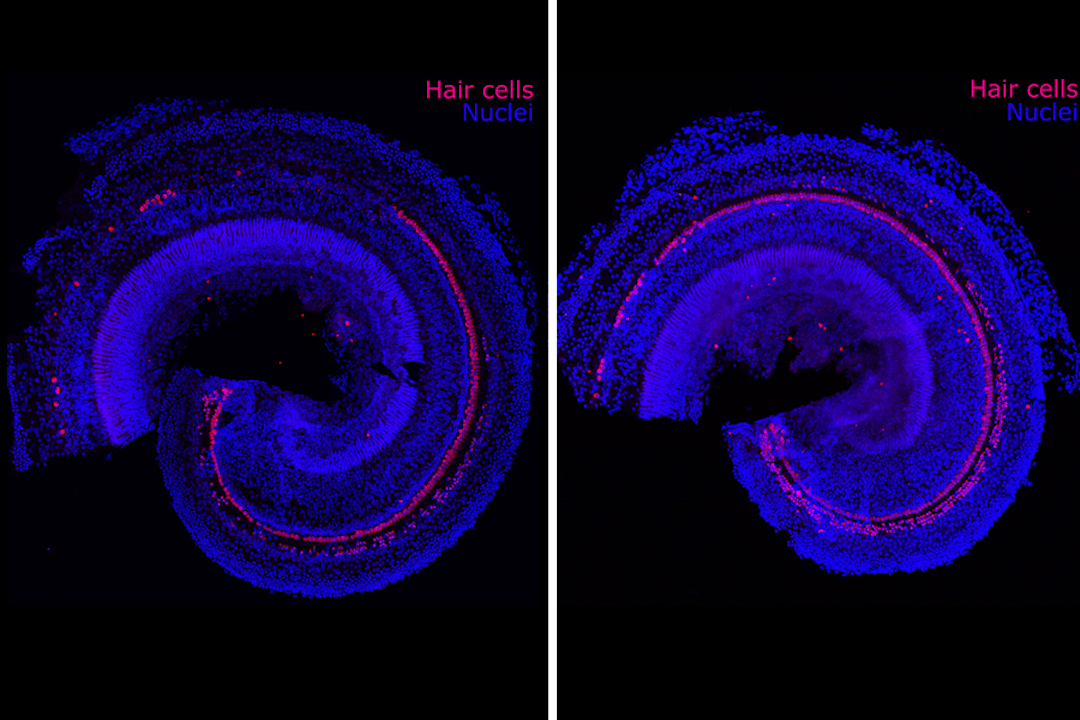
Frequency Therapeutics, a subsidiary of MIT, has developed a new regenerative therapy that could potentially reverse hearing loss.
The crux of this treatment uses small molecules to program progenitor cells to grow tiny hair cells inside the ear that could help those hard of hearing to catch sounds more effectively.
According to the team, we are each born with 15,000 hair cells inside our ears, which die off when exposed to unusually loud sounds, or from drugs including certain chemotherapies and antibiotics. These follicles never regenerate, having no way to replace them—till now.
With the new drug, the substance will be injected into a patient’s ear to regenerate these important hair cells within the cochlea.
Amazingly, in recent clinical trials, the method proved to have improved subjects’ hearing and speech perception, which is what allows them to process speech and recognize words.
“Some of these people [in the trials] couldn’t hear for 30 years, and for the first time they said they could go into a crowded restaurant and hear what their children were saying,” explained MIT Institute Professor Robert Langer.
At the moment, the researchers are recruiting for another 124-person trial, which could shed more light on the emerging treatment as soon as early next year.
“Hearing is such an important sense; it connects people to their community and cultivates a sense of identity,” said Jeff Karp, Harvard-MIT Health Sciences and Technology affiliate faculty member.
“I think the potential to restore hearing will have enormous impact on society,” he added.
Going forward, the team has lofty goals for Frequency’s treatment, with Karp saying he believes in a decade or so, reversing hearing loss could be similar to Lasik surgery for eyes, “where you’re in and out in an hour or two.”
The company is also working on a drug for multiple sclerosis (MS), which aims to use progenitor cells to turn into myelin-producing cells in the brain to replenish the loss exacerbated by the disease.
Overall, the potential of the therapy—which could end up helping patients across a whole range of diseases and ailments—is one to be hopeful about.
“It’s been an incredible experience working with the team to bring this forward. There are already people in the trials whose hearing has been dramatically improved and their lives changed. That impacts interactions with family and friends. It’s wonderful to be a part of,” Karp summed up.
[via Futurism and MIT / SciTechDaily, cover image via MIT / SciTechDaily]


