
$90M Wildlife Crossing Will Get Animals Safely Across Some Of US’ Busiest Roads
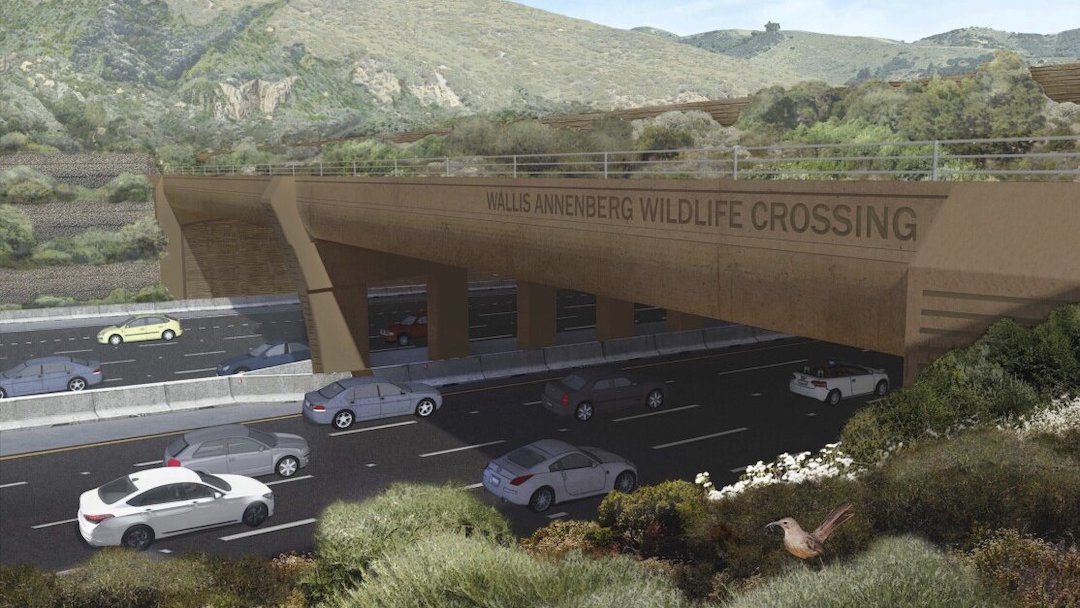
Image via Annenberg Foundation
As it was in the past, humans will learn to live alongside animals in a shared ecosystem.
This isn’t the plot for Bojack Horseman or Snow White. Or even Tarzan. It’s the premise for the Wallis Annenberg Wildlife Crossing, set to be among the world’s largest wildlife overpasses.
The US$90 million animal bridge will hang over the 101 highway near Los Angeles, and will be integrated with more than 10 lanes from one of the busiest road networks in California or the United States. The crossing has been in the plans for almost a decade, and construction for it will finally commence this Earth Day on April 22.
With a reported 300,000 cars traversing this highway each day, it is hoped that animals will have a safe passage to natural features in the area. The infrastructure will span 210 feet long and 165 feet wide to connect animals like mountain lions, coyotes, deer, lizards, snakes, and toads to two sections of the Santa Monica mountains.
Beth Pratt, a conservation leader at the National Wildlife Federation and a prominent figure behind the project, shared her vision with the Guardian that, soon, drivers could have a big cat walking right above them during peak traffic hours. “That’s such a hopeful image,” she described.
The wildlife overpass is designed to naturally intertwine with the open mountainous territory, which sets the structure apart from the typical animal crossings that use cement or steel, explained the bridge’s lead designer Robert Rock, who’s a landscape architect at Chicago-based Living Futures. To accommodate nocturnal creatures, vegetated sound walls and local plants will be added to block out light and noise.
Although the National Wildlife Foundation purports the crossing to be the “largest urban wildlife crossing in the world,“ and multiple news outlets are picking up this tidbit, the claim is up for debate. For illustration, the Netherlands has an ecoduct overpass that runs 2,600 feet. The Wallis Annenberg bridge is set to trump a US record, sure, and the official website for the state of California backs this by hailing it as “the largest standalone bridge built specifically for wildlife in the country.”
Too many animals have died while crossing America’s busy highways. The Los Angeles Times reports that the last such incident in the city happened on the Pacific Coast Highway just a few weeks ago, on March 23, when a young lion was knocked down and killed.
Stirringly, this project reflects the warmer side of humanity. 60% of the bridge’s US$90 million budget comes from private donations, with the remaining 40% derived from public funds dedicated to conservation. Gavin Newsom, the Governor of California, has lauded the bridge as an “inspiring example” of public-private infrastructure, per the Guardian.
The crossing is anticipated to only be ready in early 2025 since construction will take place mostly at night, considering the area’s extremely busy traffic during the day.
Experts point out that the area’s wildlife won’t adapt to the bridge instantly. Animals will need time to adjust and learn to trust it, which for some cautious species may take up to five years. It’s likely that wild cats will observe smaller prey get across the overpass for an extended period of time before using it themselves.
[via The Guardian and WION, cover image via Annenberg Foundation]


