
‘Oreology’ Explains Why The Creme Unwaveringly Sticks To One Side Of The Cookie
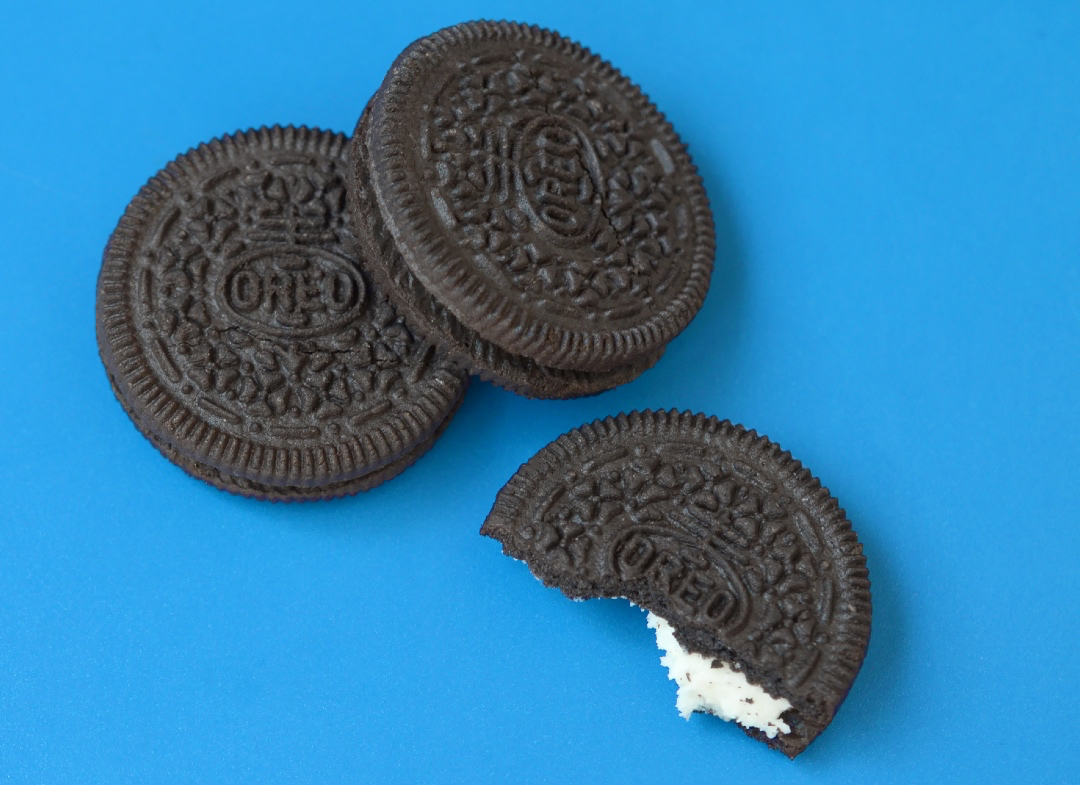
We’ve all had the shared experience when chowing down on an entire box of Oreos, trying to twist the wafers apart so there’s an equal amount of filling lining both sides, but till now, it’s hard to believe anyone’s successfully achieved it.
Could this be one of humanity’s greatest challenges? This is ‘Oreology’, the so-called study of the flow and fracture of sandwich cookies. Well, the brightest minds from MIT were on the case to solve this elusive mystery.
As Max Fan, an undergraduate in MIT’s Department of Mechanical Engineering put it: “There’s the fascinating problem of trying to get the cream to distribute evenly between the two wafers, which turns out to be really hard.”
And no, it hasn’t all been in your head, because there’s proof. When the team subjected cookies to rheology tests in a laboratory setting, they found that—despite the different flavors or ratio of stuffing to wafer—the Oreo creme always stuck to one wafer when twisted open.
The only exception seemed to be older boxes of cookies, in which the stuffing did separate more evenly between the two pieces at times.
Overall, the team tested over 20 boxes of Oreos, including regular, Double Stuf, and Mega Stuf “levels” of cream, and regular, dark chocolate, and Golden varieties.
Turns out, the way Oreos are manufactured in the factory could be the cause of this mind-boggling problem.
“Videos of the manufacturing process show that they put the first wafer down, then dispense a ball of cream onto that wafer before putting the second wafer on top,” explained Crystal Owens, an MIT mechanical engineering PhD candidate.
“Apparently that little time delay may make the cream stick better to the first wafer,” she posited.
To allow Oreo lovers all over the world to try the experiment at home, the team created a 3D-printable ‘Oreometer’ device that makes use of common household items, like pennies and rubber bands, to control the twisting force so you can subject your very own cookies to the test.
Science has spoken—Oreo creme is more likely to stick to one wafer after being twisted open. Perhaps we’ll just have to live with the truth and get to dunking.
[via CNN and MIT, cover image via Ukrainian photographer Mykhailo Polenok | Dreamstime.com]


