
I Choose You, ‘Pokémon Go’: Researchers Think Game May Ease Depressive Symptoms
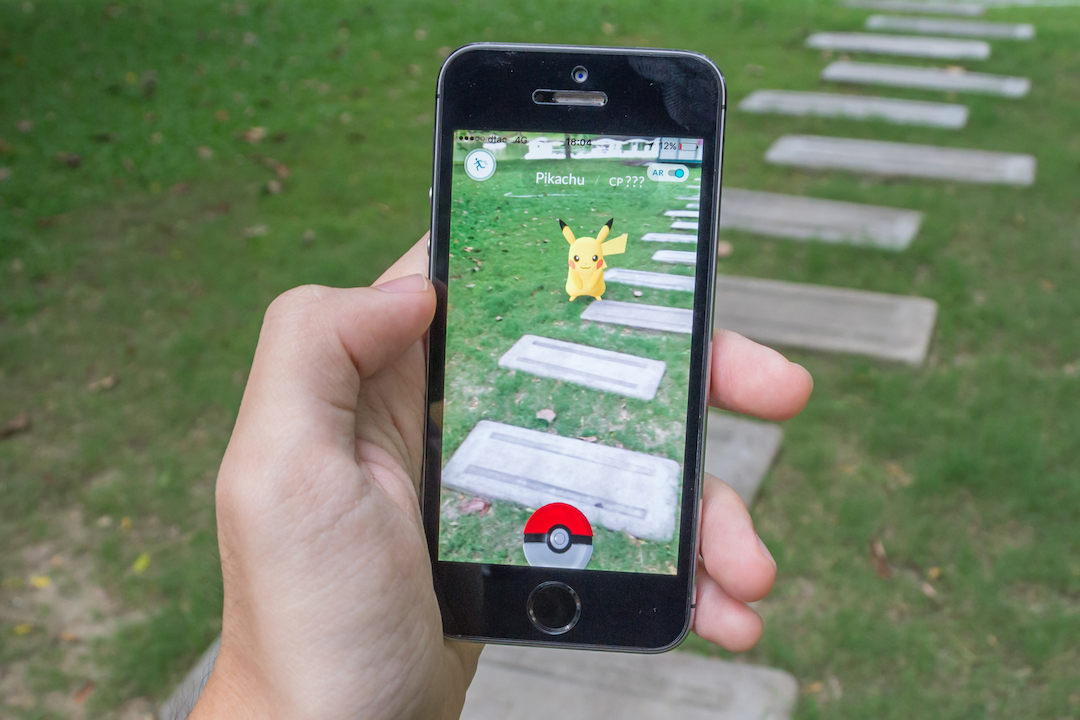
A new study from the London School of Economics and Political Science (LSE) had an interesting hypothesis: Could the widely-popular Pokémon Go help soothe non-clinical depression?
After researching the effects of location-based mobile games on local depression trends, scientists surprisingly found that, yes, it could actually help alleviate mild depressive symptoms.
Using data from the staggered release of the game over 50 weeks in 2016 into 166 regions in 12 English-speaking countries, the researchers were able to tap into both groups that played the game from day one, and “control” groups for regions where the game had a delayed release.
The local level of depression was measured via Google Trends, taking note of the number of depression-related internet searches during that time period.
Astonishingly, the team found that the release of Pokémon Go had a significant short-term decrease in such depression-related searches.
This could be because location-based games in themselves encourage outdoor physical activity, socializing face-to-face, and exploration of nature, factors that have been widely documented as having a positive impact on one’s mental health.
With the relatively low cost of mobile games, and the ability to roll them out widely, the scientists suggested that it could prove to be an intriguing idea that policymakers could look to harness.
Could more games like Pokémon Go be the answer to better mental health among the general population? Perhaps so.
[via The Gamer and London School of Economics and Political Science, cover image via Wachiwit | Dreamstime.com]


