
NASA Presents The Deepest, Crispest Infrared Image Of Our Universe Yet
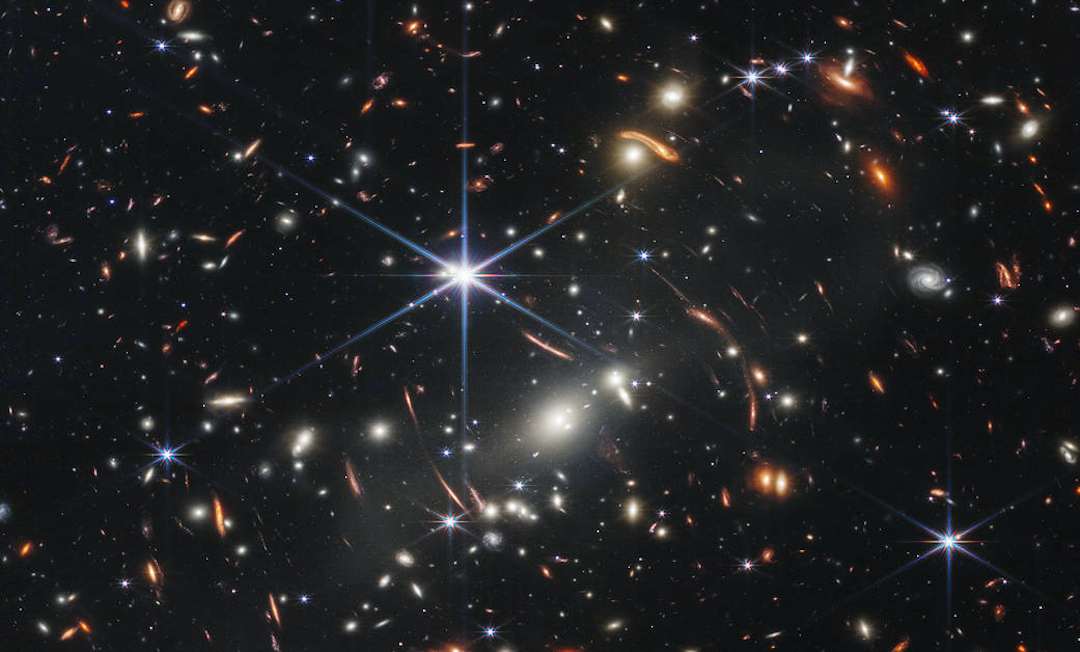
On Monday, President Joe Biden was shown the very first images from NASA’s James Webb Space Telescope, among which was the sharpest, deepest infrared image of the universe ever captured.
This visual—known as Webb’s First Deep Field—reveals a glorious image of distorted red arcs taken from a galaxy created only 600 million years after the Big Bang. You can explore it yourself here.
How small is the #JWST field in that amazing image?
— Rami Mandow ðŸ³ï¸ðŸŒˆ (@CosmicRami) July 12, 2022
We heard “like a grain of sand, at arms length” ….
Here’s what that looks like!
It’s tiny when compared to even some nearby galaxies. Imagine all the sky covered in galaxies!
Credit: https://t.co/Q3jYzdYkN0 pic.twitter.com/ogzwT2PYz7
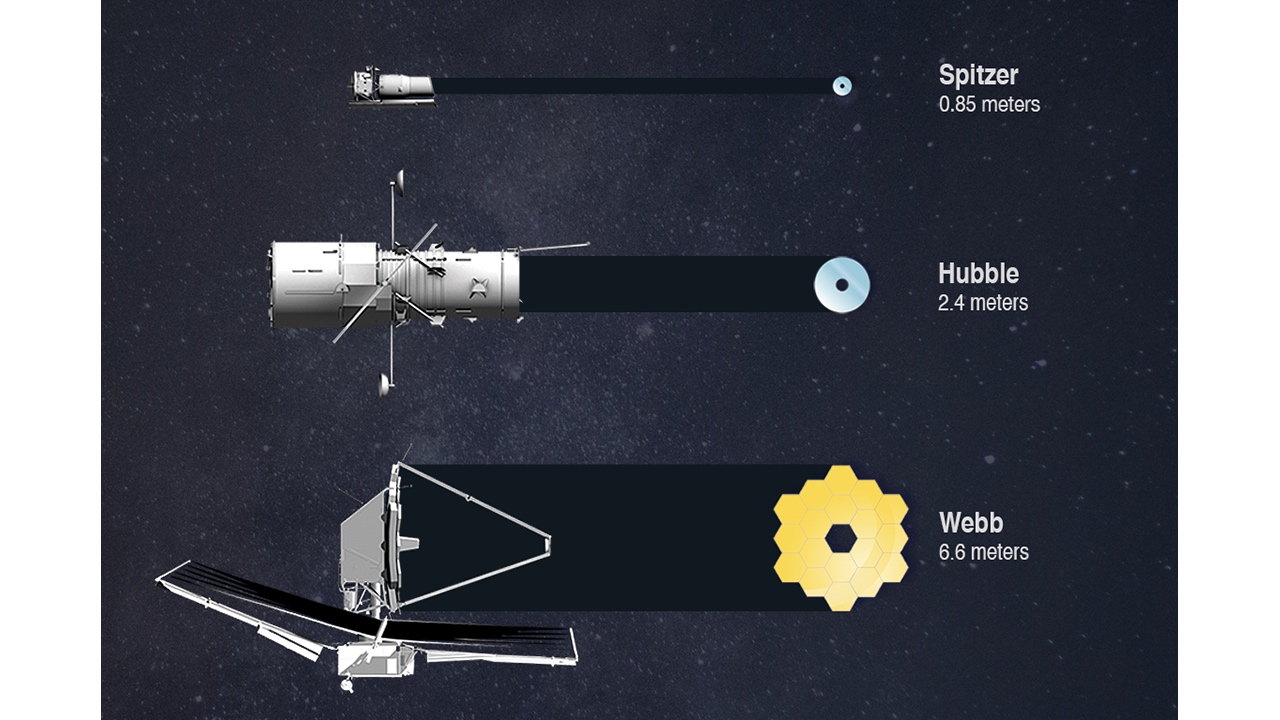
Its documentation is made possible with its Near-Infrared Camera (NIRCam), a 21-foot-wide golden mirror, and highly sensitive infrared instruments. Hidden in the depths of this picture are the beginnings of even more far-off galaxies, displaying Webb’s mastery.
According to NASA administrator Bill Nelson, because of the way light travels at 186,000 miles per second, even the littlest speck on this image is over 13 billion years old. It has been an incredible feat on NASA’s part to develop a telescope to capture such an image within 12.5 hours. The previous Hubble Space telescope would have taken weeks of examining our skies to produce such a finding.
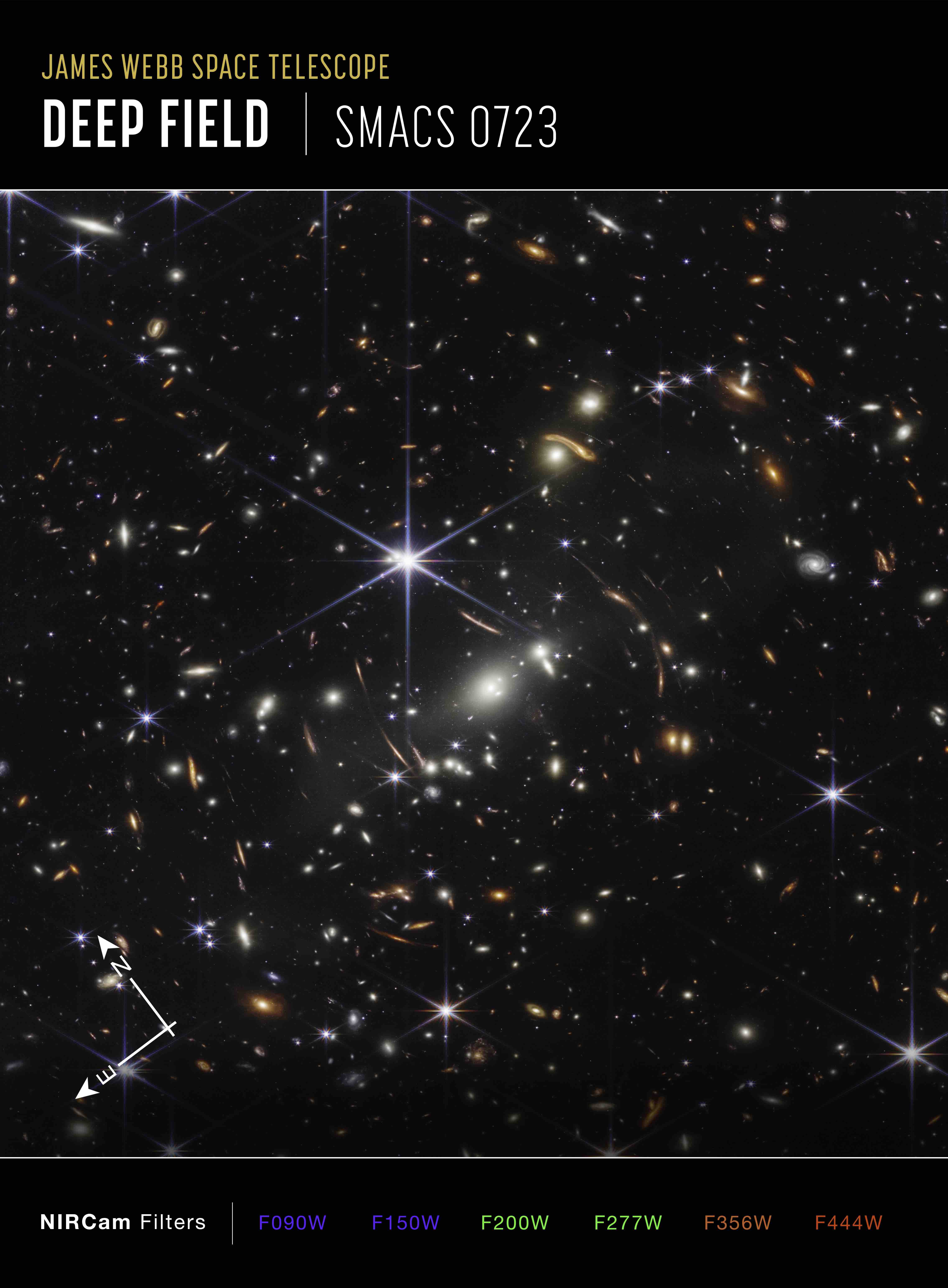
The photo of this portion of our universe shows a cluster of galaxies named SMACS 0723. According to NASA, if you were to pick up a grain of sand and hold it at arm’s length while you point it towards the sky, that is how big this area of our cosmos was captured.
The telescope was created to search for the very first star in our universe. It was launched last year on December 25 in partnership with the ESA (European Space Agency) and the CSA (Canadian Space Agency) and was a replacement for the famous Hubble Space Telescope.
One of the first objectives set for the telescope was to find the very first star created after the Big Bang. The next was to uncover other planets that could potentially be hospitable. With the release of its very first full-color picture, we can see how close scientists are getting to reaching that goal.
Besides capturing the beginnings of our universe, Webb has also studied a planet that is over 1,000 light-years away from Earth called WASP-96. Its studies show that its orbit is too close to its parent star to support life, so the search continues.
Just from this tiny sliver of our universe, we have already begun to see how the James Webb Telescope could bring us one step closer to uncovering the mysteries of our universe.


