
Damien Hirst Artwork Dismantled At Museum Following PETA Complaints
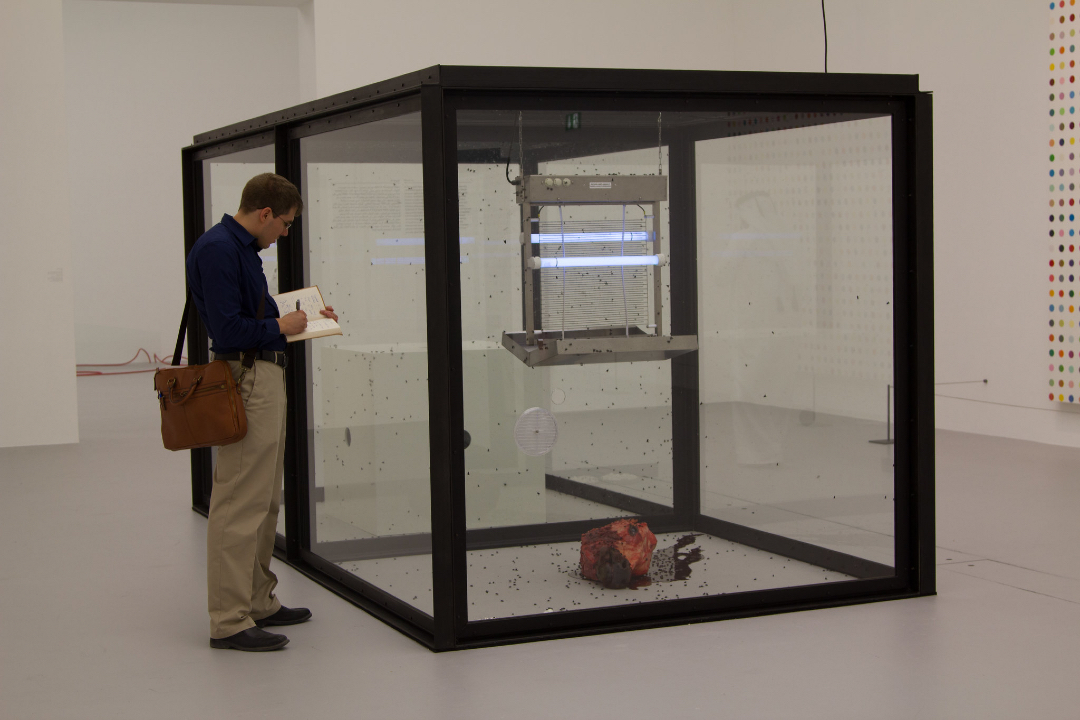
Image via Gazanfarulla Khan / Flickr (CC BY-ND 2.0)
The showing of a 1990 sculpture by Damien Hirst at the Kunstmuseum Wolfsburg has been swatted by PETA as it involves real flies—hatching them first, watching them grow, before ultimately killing them.
A Hundred Years has been described by the English artist as “a life cycle in a box” (via ARTnews). It starts with a hatching area, where larvae are born. When they’ve grown into flies, the subjects travel through a hole and follow an artificial light, which burns them and causes their death.
The glass-case display was planned to be shown alongside other artificial light-focused artworks at the museum’s Power! Light! exhibition running from March 12 through July 10, with the manufacturing of the life cycle of flies scheduled to loop until the end of its stint. Female house flies lay about five to six batches of eggs during their lifetime, and a housefly lives for 28 days on average, meaning several batches would have perished in the name of art by the end of the exhibition.
Animal corpses sometimes feature in Hirst’s sculptures. One iteration of the offending piece, called A Thousand Years (shown above), even leads the flies to the severed, bloody head of a cow.
Following complaints by the animal rights group, municipal authorities had the glass case dismantled.
Andreas Beitin, director of Kunstmuseum, justified on the Braunschweiger Zeitung that it was in the organizers’ belief that flies were not protected by the Animal Welfare Act. The museum’s managing director Otmar Böhmer also told the German Press Agency that the exhibit’s maggots were purchased from a fishing supplier, and that only a small portion of the flies from the display were hatched insects.
The museum has now requested Hirst’s studio to replace the winged subjects with artificial versions. If that’s not possible, it has advised for A Hundred Years to not be exhibited again.
[via InsideHook, The Daily Beast, ARTnews, cover image via Gazanfarulla Khan / Flickr (CC BY-ND 2.0)]


