
NASA’s Side-By-Side Images Show How Much More Sophisticated James Webb Camera Is
Earlier this week, the internet was sent abuzz when President Joe Biden unveiled the very first images from NASA’s James Webb Space Telescope (JWST), including the deepest, sharpest infrared picture of the universe ever captured.
Now, more images have emerged, revealing details of our stars, galaxies, and the universe we’ve never seen before. In fact, the scientists themselves were so moved by the snapshots, they said they “nearly broke” from emotion.
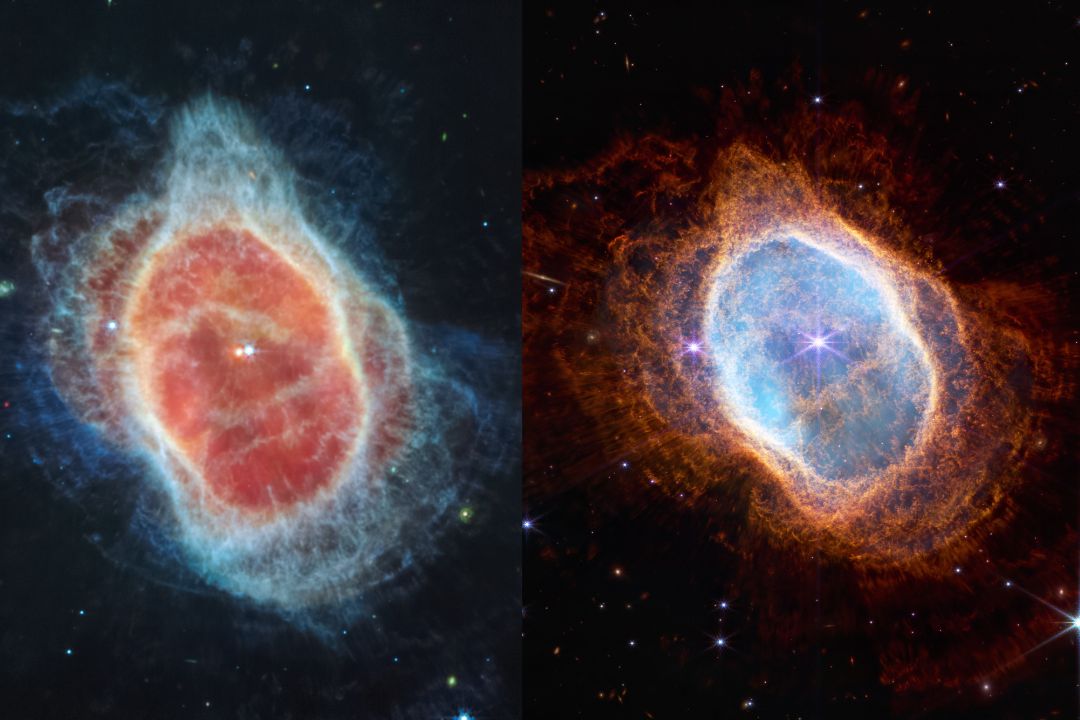
When compared side-by-side with earlier pictures taken by the Hubble Space Telescope—launched into orbit in 1990—it becomes clear why the space agency spent a whopping US$10 billion on the new observatory.
The images taken by the JWST are higher-definition, crisper, and more vibrant; and it reveals more. For example, Hubble’s shot of the Southern Ring Nebula shows just one light at its center, while the newer picture clearly shows two stars.
According to Insider, the difference boils down to JWST’s use of different wavelengths of infrared light to capture its images, allowing it to better display the structure of the nebula and the “missing” star scientists were certain existed.
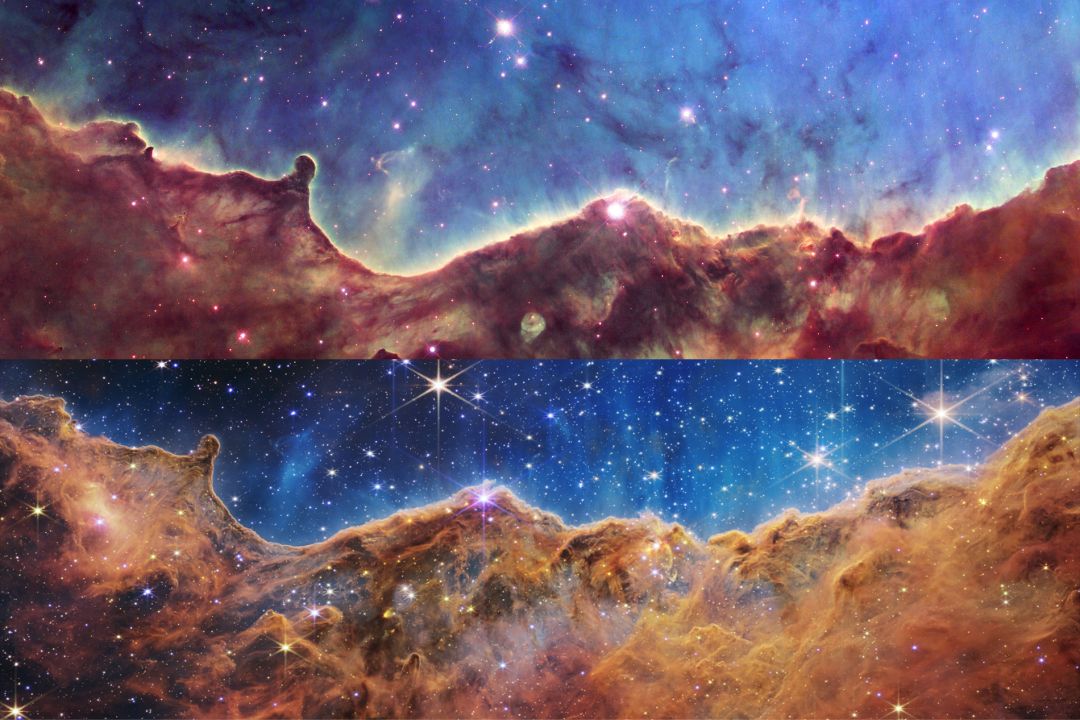
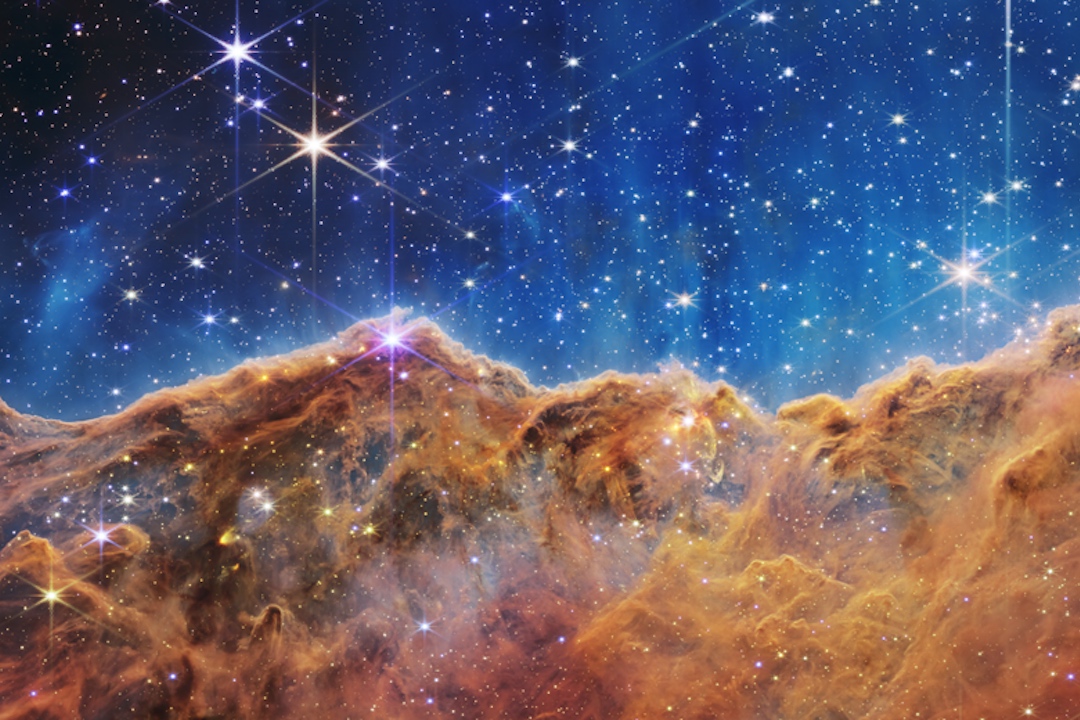
One of the most striking pictures unveiled was that of the Carina Nebula: NGC 3324, which as per Big Think, is a young star-forming region known among researchers as the “Cosmic Cliffs.”
In Hubble’s image, the vague outline of the range can be seen, dotted with bright stars, and a blue vapor appearing to be “rising” above. Whereas, in the latest picture of the region by JWST, one can see hundreds more stars, with the crevices of the “cliffs” in clear view.
“When I see an image like this, I can’t help but think about scale,” mused Amber Straughn, a NASA astrophysicist on the JWST team, while presenting the images on a livestream.
“Every dot of light we see here is an individual star, not unlike our sun, and many of these likely also have planets. And it just reminds me that our sun and our planet, and ultimately us, were formed out of the same kind of stuff that we see here.”
An image is worth a thousand stars ✨
— NASA Goddard (@NASAGoddard) July 12, 2022
Today, @NASAWebb released the telescope’s first full-color images and data to the world. We’re so proud to have been a part of this incredible international collaboration.
Learn more & download the images: https://t.co/ATMtbf5BA5 pic.twitter.com/vgFQCnti5d
[via Insider and Big Think, images via NASA, ESA, CSA, and STScI]


