
A Cosmic ‘Heartbeat’ Has Been Detected From Deep Space
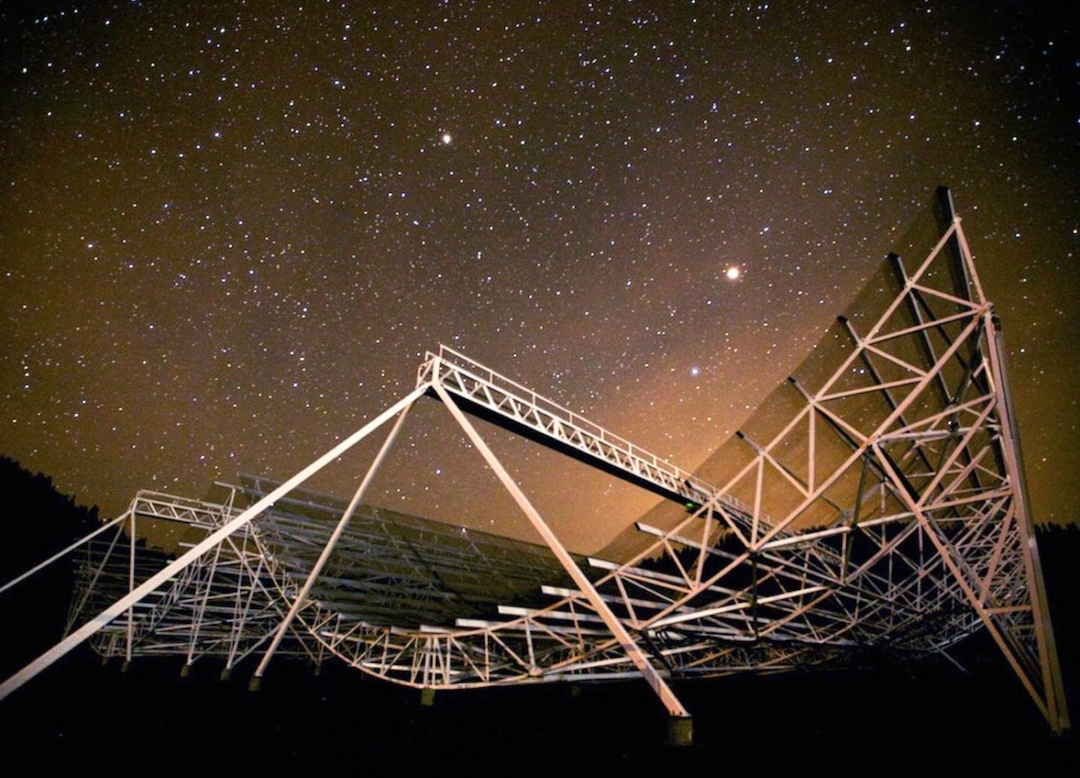
A new cosmic mystery has surfaced in the form of a heartbeat-like pulse, leaving astronomers in scrambles.
Pulses like these are known as fast radio bursts (FRBs). Discovered in 2007, FRBs are millisecond bursts of energy from pulsars or magnetars—neutron stars with a powerful magnetic field—that have traveled through the galaxy before reaching Earth.
This pulse was discovered by a telescope belonging to a British Columbia-based institute called the Canadian Hydrogen Intensity Mapping Experiment (CHIME). The finding was named FRB 20191221A and it was first reported in a paper released in Nature.
The ‘heartbeat’ has particularly sparked interested due to its duration. It lasted a total of three seconds, which may not seem long, but it is thousands of times longer than anything that has ever been captured. In that short period of time, the pulse would peak every fifth of a second, giving it its heartbeat quality.
Scientists believe this FRB has traveled billions of lightyears from a neutron star within an ancient galaxy that has caused this cosmic pulse to feel so forceful. Not only had the signal been longer than normal, but it was also a million times stronger than the average FRB.
Researchers are speculating that it could have come from an enormous object somewhere out in deep space or from something that is usually obscured but has since found a clear path to cast a signal to reach us.
This discovery opens the door to understanding the expansion of our cosmos and the existence of stars.


