
NASA Launches Stem Cells Into Orbit To See If They’ll Thrive Better In Space
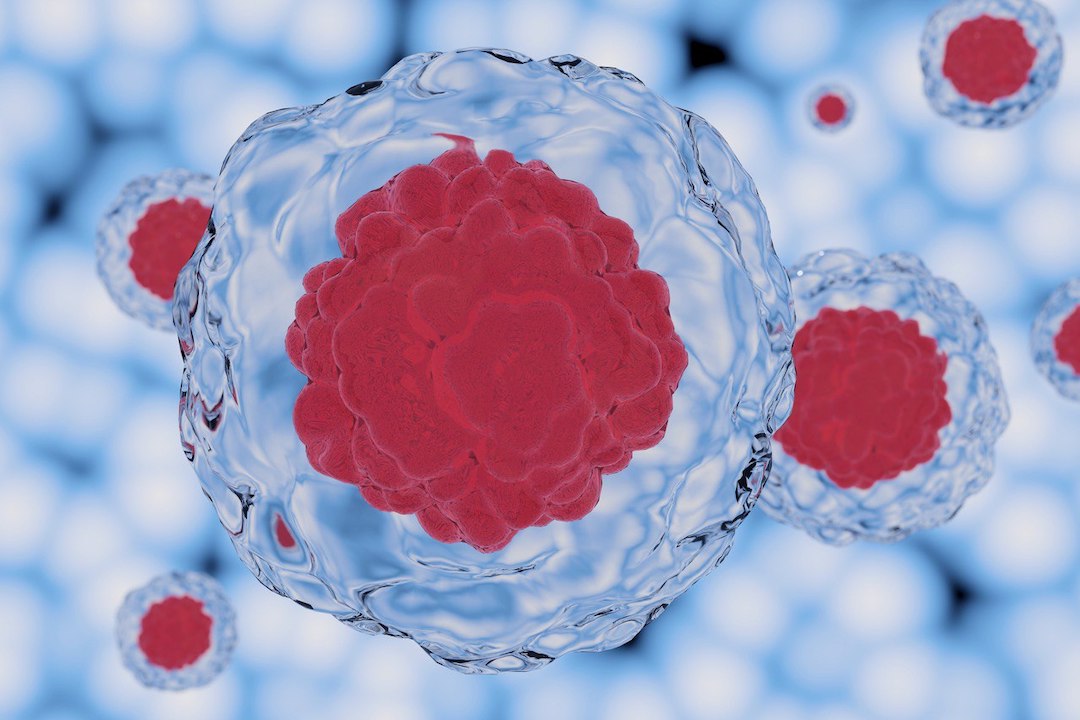
As part of a joint collaboration between NASA and the Cedars-Sinai Medical Center, a sample of stem cells has been sent up into space—where it will remain for just over a month—so scientists can finally determine if the cells can grow better in an environment without gravity.
According to BioSpace, the container of cells arrived at the International Space Station (ISS) over the weekend, and is part of a series of research projects that hope to garner insight into how the cells age differently in space, and if the terrestrial challenges can be overcome in orbit.
In short, as humans, though we are made up of different cell types with varying purposes, they all start out as raw stem cells. Once developed in a particular way, these cells then multiply to become a stem cell line. As of now, researchers are still looking into how to replicate the process on a larger scale.
At the moment, as per AP News, the Food and Drug Administration (FDA) has only approved stem cell-based products with blood-forming cells from the umbilical cord of infants to treat patients with blood disorders.
Clinical trials are being performed to test the utility of stem cells in helping patients with conditions including macular degeneration, Parkinson’s disease, and even damage from prior heart attacks.
Even if these tests are successful, however, there’s one major problem: the lack of capacity to mass-produce such treatments.
Jeffrey Millman, Biomedical Engineering Expert at Washington University, explained that due to the Earth’s gravitational pull, it’s currently a difficult endeavor to grow the vast quantities of cells needed for these therapies, which could require more than a billion cells per patient.
As such, the recent mission to the ISS hopes to discover if the stem cells grow differently without g-force, with a control box of cells back here for comparison. The experiment is scheduled to end in approximately five weeks, with the cells returning in the same SpaceX capsule.
“By pushing the boundaries like this, it’s knowledge and it’s science, and it’s learning,” quipped Clive Svendsen, Executive Director of Cedars-Sinai’s Regenerative Medicine Institute.
[via BioSpace and AP News, cover image via Theo Gottwald | Dreamstime.com]


