
Scientists Hack Flies’ Brains To Remote-Control Them
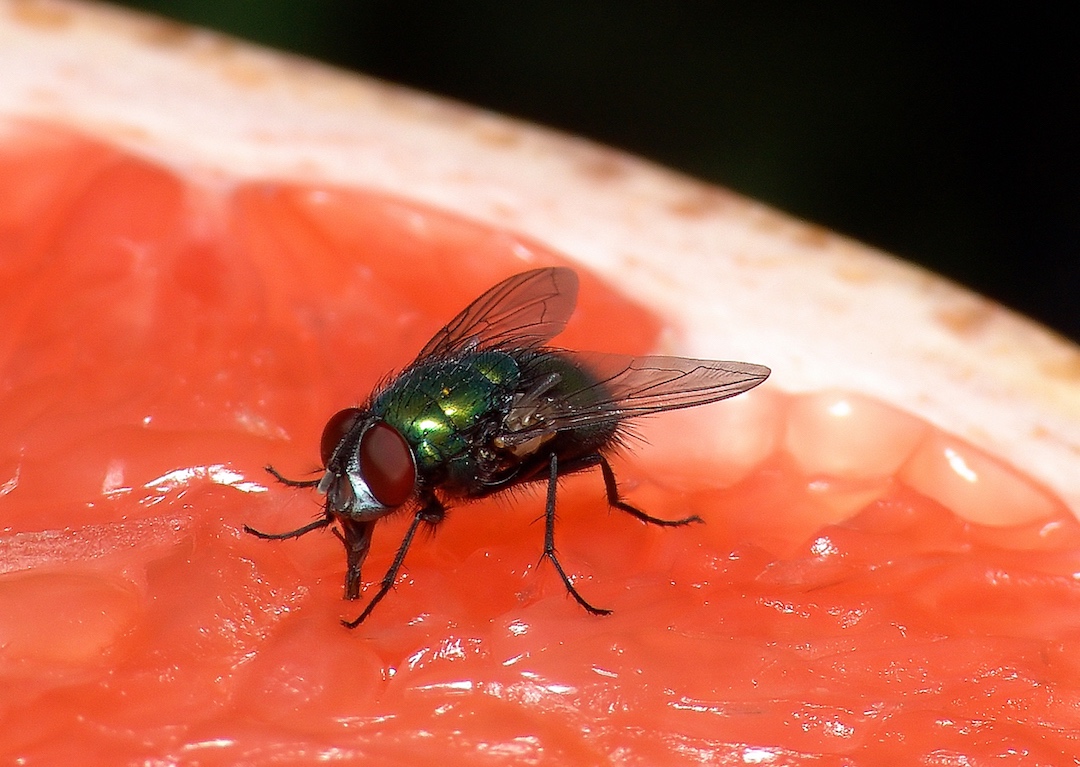
While remote-controlled cars and animals are a dime a dozen, this version stands out for being the real deal. Scientists at Rice University have hacked the brains of fruit flies to control them wirelessly.
The team began the experiment by genetically engineering the flies to have an ion channel in their neurons that reacts to heat. In the presence of heat, the neurons are activated, propelling the flies to act according to certain instructions.
The instructions here were pretty simple; they involved the flies spreading their wings, a gesture usually reserved for mating.
For the remote control bit, the flies’ brains were injected with iron oxide nanoparticles that heated up when they were near a magnetic field that was switched on. An active magnetic field would trigger their genetically-engineered neurons, getting them into their spread-wing stance.

To test how well the remote-controlling worked, the researchers placed the flies in an enclosed area with an electromagnet on the roof, while a camera recorded their responses to heat. True enough, the insects performed as they were intended.
You can see a fruit fly spreading its wings at the scientists’ will in the viewer below.
According to the team, the flies were able to react to the magnet in only half a second. The researchers have published their findings in the Nature Materials journal.
The benefits of this study may not be immediately obvious to the public, but the team explains that such technologies could inspire the development of minimally-invasive treatments for neurological disorders.
Through this experiment, they hope to find a way to bypass human eyes and restore sight in patients with vision impairments by activating the visual cortex.
[via New Atlas and Interesting Engineering, images via various sources]


