
NASA’s James Webb Telescope Has Less Memory Space Than Your Smartphone
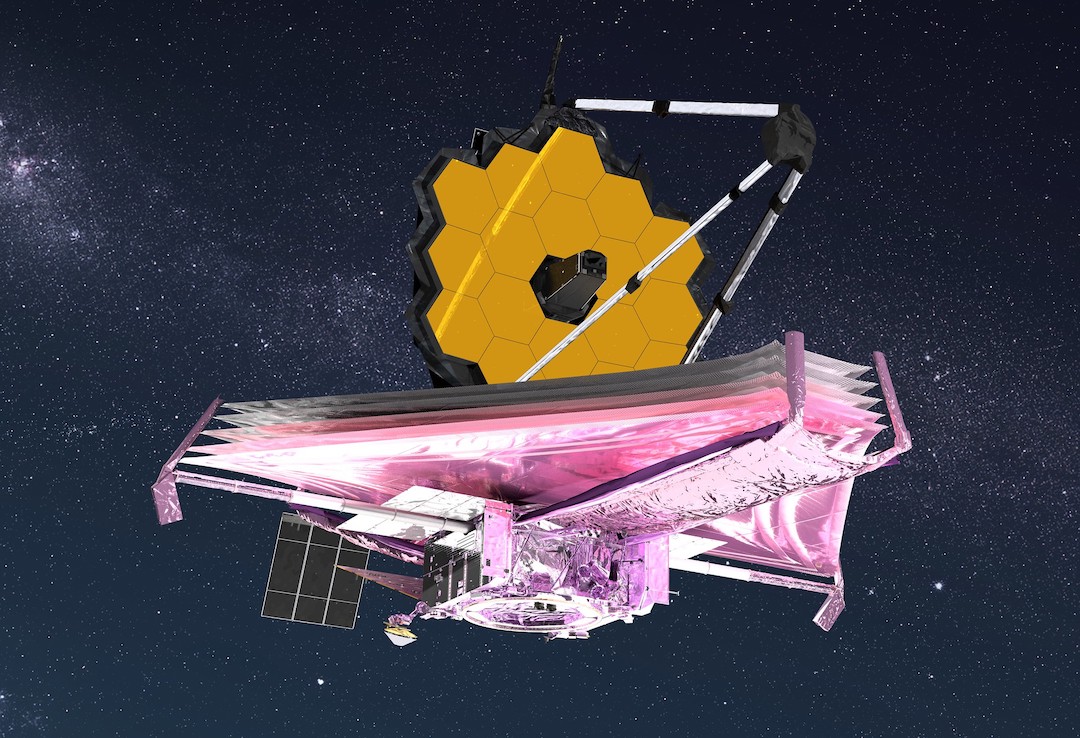
The James Webb Telescope has provided us with some astronomically brilliant pictures, which have given us never-before insight into space and our existence. However, if you thought the telescope was operating with a memory load fit for the speed and brilliance of NASA’s best computers, you would be wrong. In fact, the device in your pocket may have more space than this super-telescope.
The telescope contains a total of only 68 GB of space, a storage amount that even Apple is phasing out from its phones, with the Pro models beginning at 128 GB. NASA’s Michael Menzel, who is the mission’s systems engineer, and other experts spill all the details in a report from the IEEE Spectrum.
Webb has been sent to a point a million miles from space, which is further than the Hubble has ever been. As such, it needs to be highly self-sustainable as it won’t be easy to send a team up to repair the telescope if needed. Its distance to Earth also means that it will sometimes lose contact with Earth on its voyage through the unknown.
Taking into consideration the radiation and temperatures it will have to endure, the solid-state drive (SSD) had to be one that could withstand all of this for the 10-year duration of the journey. Hence, the smaller capacity chip was chosen for the trip.
Impressively, its tiny 68 GB specs are enough to keep it going and to hold all the ultra-high-resolution pictures. Not all 100% of the data is used for storing pictures. 3% of the GB SSD is dedicated to engineering and telemetry data. Alex Hunter from the Space Telescope Science Institute notes that the mission’s 10-year long duration is sure to wear the data capacity down, and over time it will reduce it to just 60 GB.
With that being said, the telescope frequently sends data back to Earth with the help of a KA-band for image transfers. This means that it’s also constantly recycling space on its drive. According to a flight systems engineer at the Space Telescope Science Institute, Carl Hansen, it sends about 28 megabytes of data back to Earth per second as it only takes about 120 minutes for the card to be filled up.
Data is sent down to earth during two 4.5-hour windows, which means a total of 57 GB of data is produced each day. Which is considerably more than Hubble’s one to two GB of data a day.
[via DIY Photograph and PetaPixel, cover image via NASA’s James Webb Space Telescope]


