
Bees Prove They Are Really Smart And ‘Sentient’ In Insect IQ Tests
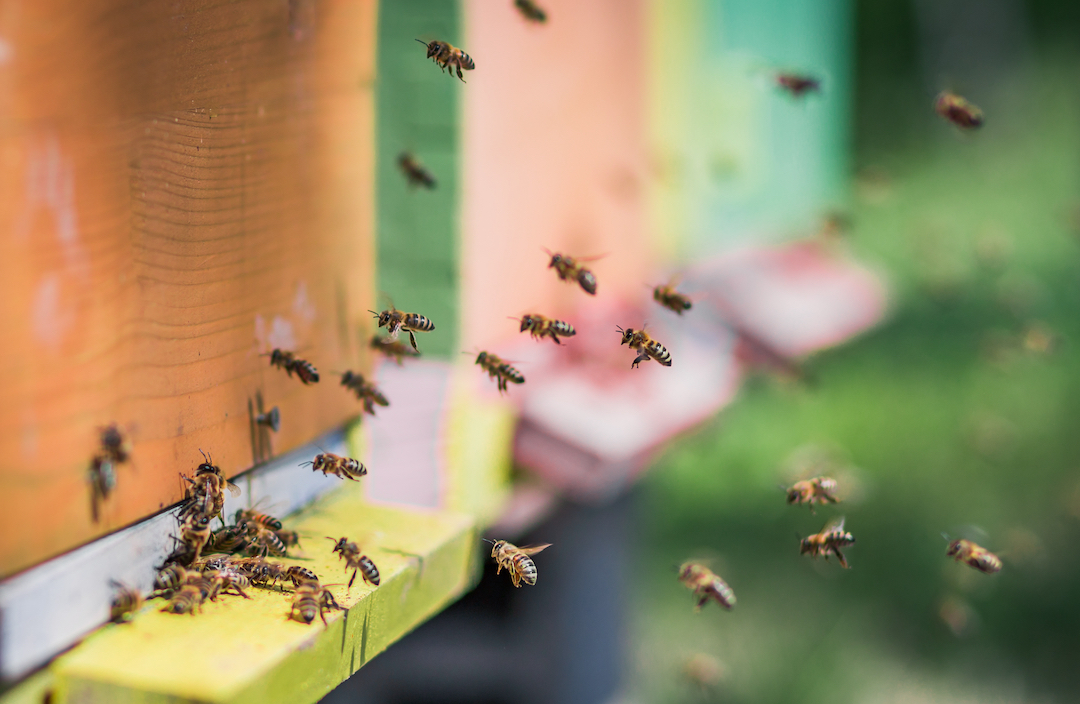
No matter how you feel about them, bees are integral to keeping the balance of the ecosystem. They’re responsible for the pollination of one-third of the world’s food and help keep the air clean.
As it turns out, there are more reasons to love and protect this population. Ahead of the release of his book, The Mind of a Bee, on July 19, prolific bee expert Lars Chittka divulged to The Guardian about how well the winged creatures have performed in intelligence tests, even expressing emotion.
Bees can recognize human faces and count, revealed Chittka, who’s a professor of sensory and behavioral ecology at the Queen Mary University of London and has been studying the critters for three decades.
For one challenge, female worker bees were trained to recognize human faces, and they were rewarded with sugar. The insects were shown black-and-white images of human faces, with one of the portraits being associated with the treat.
It would only take a dozen to two dozen training sessions for the bees to become “proficient face recognizers,” described Chittka. When they were shown an array of faces, the bees happily picked the correct image even if there was no reward.
During the experiments, Chittka also discovered that, like humans, there was always a “genius” from the pack who would frequently perform better than the rest.
Bees also learned better by observing other bees perform tasks, and when it was their turn to carry out challenges, they’d not only replicate the moves but also improve on them for better results without trial or error.
In addition, they have been found to experience PTSD-like symptoms, indicating sentience. In one test, they were subjected to a fake crab spider attack when landing on a flower. In the days after, they were repelled by flowers—avoiding them like ghosts, said Chittka—and would spend time inspecting the area before finally trusting the flowers.
This fearful behavior could be treated; when the bees were offered a treat, they became more trusting and were more likely to land on an unfamiliar, previously suspicious, flower.
In another test, the bees were made to navigate a sphere in the dark. Interestingly, they were later able to identify this sphere visually.
And in a counting challenge, the creatures were taught to fly past three identical landmarks to reach food. Eventually, scientists added to the number of landmarks and modified the distance between each point. Each time, however, the bees stopped at only three landmarks because they were taught that was the magic number for food.
You can learn more about the behavior of bees in Chittka’s new book, The Mind of a Bee.
[via The Guardian and ExtremeTech, cover photo 182160454 © Disqdr | Dreamstime.com]


