
Weightless, Disposable Paper Battery Can Be Activated With Water
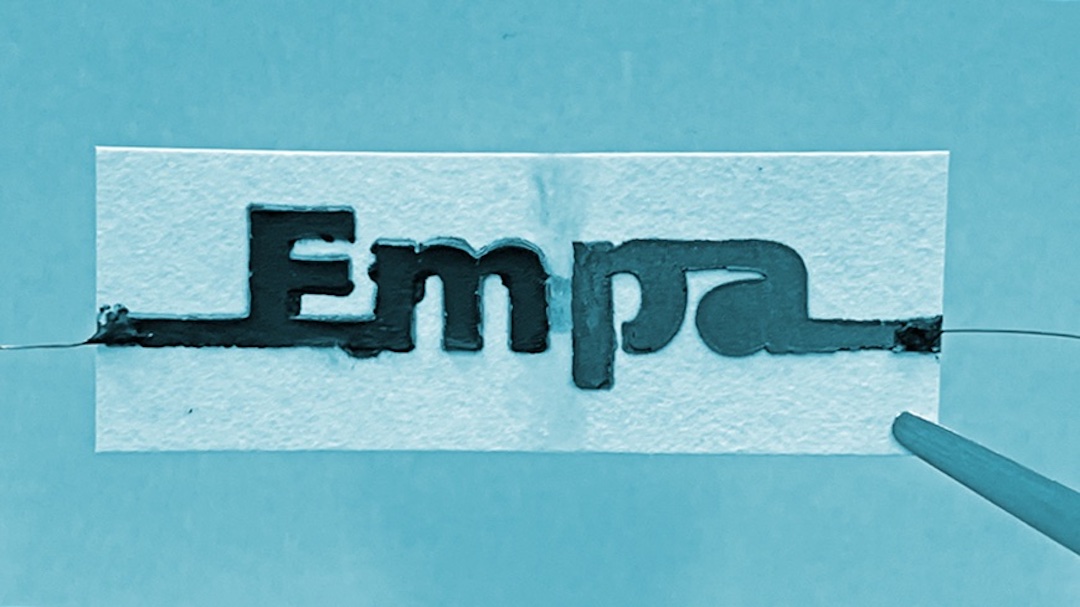
In a bid to find a better solution for low-power, single-use disposable electronics, researchers at the Empa institute have created a water-activated paper battery. The team believes innovation could come to replace wasteful smart trackers, environmental sensors, and medical diagnostic devices that can only be used once.
The battery comprises at least one small cell, with three different inks printed onto a rectangular strip of paper. The paper is then doused in salt, and its shorter ends dipped in wax before an ink with graphite flakes—acting as the positive end of the battery—is printed onto one side of the paper while ink containing zinc powder—the negative end of the battery—is printed onto the reverse side.
Following that, another ink mixture containing graphite flakes and carbon black is printed on both sides of the strip, acting as current collectors that connect the positive and negative ends of the batteries to two wires located at the wax-dipped ends.
Just by adding a small amount of water, the salts coating the paper dissolve, releasing charged ions to make the strip ionically conductive. As the ions disperse, the zinc present in the ink is oxidized and releases electrons, which is then transferred via the inks to the graphite cathode.
There, a redox (reduction and oxidation) takes place with oxygen in the air, generating an electrical current that can be used to power external devices. During the study, the team successfully combined two cells to start a liquid crystal display alarm clock, reaching a stable voltage of 1.2 volts, just shy of the standard AA alkaline battery’s 1.5 volts.
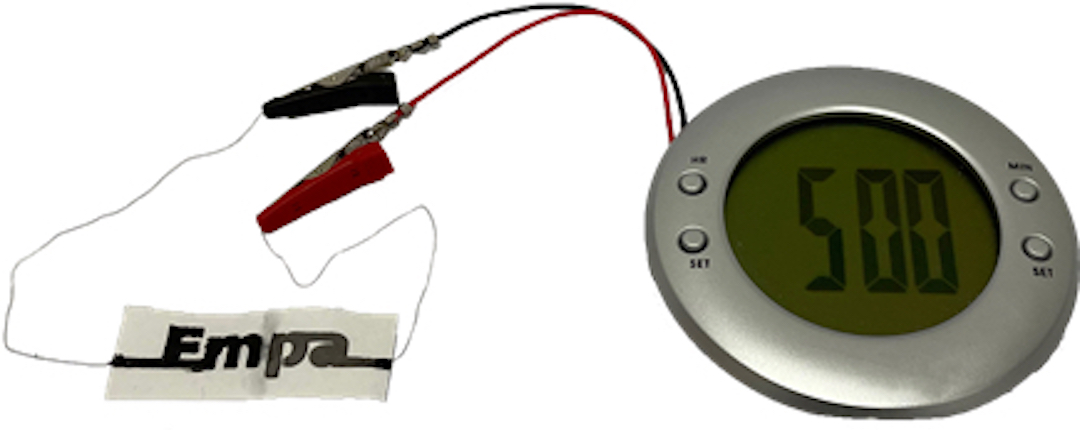
After an hour, while the experimental battery’s performance dropped sharply as the paper dried, the researchers simply added more water, allowing the cell to maintain a stable operating voltage of 0.5 volts for another hour.
“What’s special about our new battery is that, in contrast, many metal air batteries using a metal foil that is gradually consumed as the battery is depleted, our design allows to add only the amount of zinc to the ink that is actually needed for the specific application,” Guastav Nyström, who led the study, explained.
As for the issue with the battery drying out, the scientist was confident it could “be engineered differently to get around this problem,” and said that if the cell were to be applied in certain humidity or wet environments, the problem wouldn’t be as prevalent.
Could this be the key to reducing low-power electronic waste? It certainly seems promising.


