
3D-Printed Insects Bring An Everlasting Protein Source To The Table
The future of food is currently in hot water as consuming meat excessively has proven to have adverse effects on the environment, and potentitally health. But the idea of eliminating meat seems improbable as protein remains a necessity in people’s lives.
Singapore-based researchers are looking to provide some interesting alternatives to the food crisis with 3D-printed insects as a viable source of protein.
A team at the Singapore University of Technology and Design (SUTD) is taking a bug-eyed look at alternative protein sources.
Scientists know that trying to convince people to switch from beef to cricket or algae is a rather long stretch. However, there is no denying that insects are an untapped market for protein consumption.
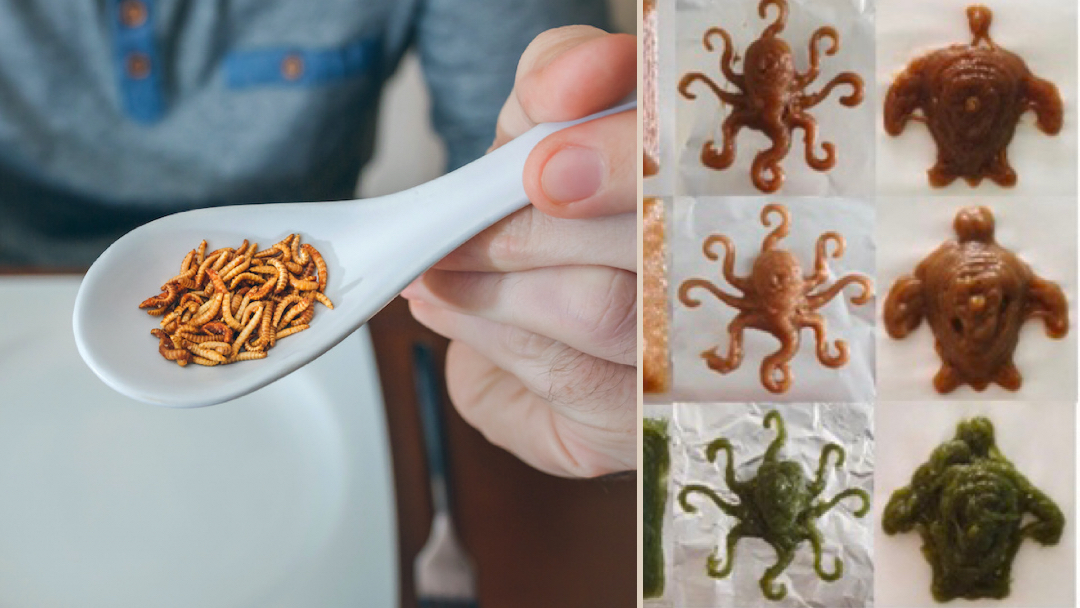
The team found that instead of eating larvae straight, it was more palatable to eat them mixed with something else. So they used 3D printing to create cricket blends with bases such as carrots, changing the colors and flavor profiles into something that people might not mind trying. Oh, and with those fun shapes, here’s hoping the idea of biting into a bug won’t crawl into picky eaters’ heads.
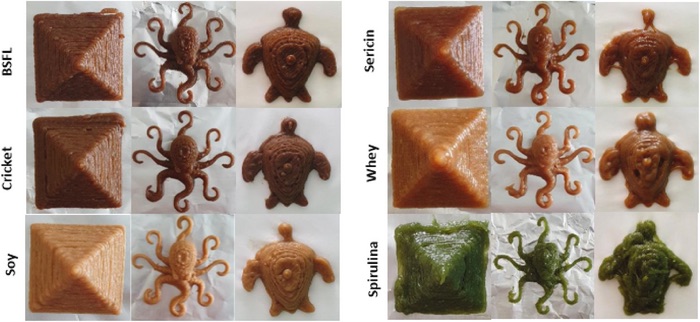
The study, which was published in Food Hydrocolloids, optimized the use of food inks to create food that was visually appealing and chockfull of good proteins. The coloring was created out of carrots, xanthan gum, and proteins. The carrot was used as the basis for the color and the taste of the printed food.
It was then mixed with a variety of other food sources, including spirulina, soy, cricket, black soldier fly larvae, and sericin.
Aakanksha Pant, co-author of the study, said in a press release that this new discovery could further the 3D-printing food industry and encourage people to combine and create new flavors and foods.
[via E&T Magazine and UNILAD, images via various sources]


