
Scientists Explore Construction On Moon & Mars With ‘Extraterrestrial Cement’
When humankind eventually sets up shop on Mars, we’ll need to build everything from the antigravity ground up, such as houses, skyscrapers, and rocket landing sites.
Here’s the kicker: How are we going to transport the heavy and bulky construction materials all the way into space or to the Moon?
“If we’re going to live and work on another planet like Mars or the Moon, we need to make concrete. But we can’t take bags of concrete with us—we need to use local resources,” remarked Norman Wagner, Unidel Robert L Pigford Chair of Chemical and Biomolecular Engineering at the University of Delaware.
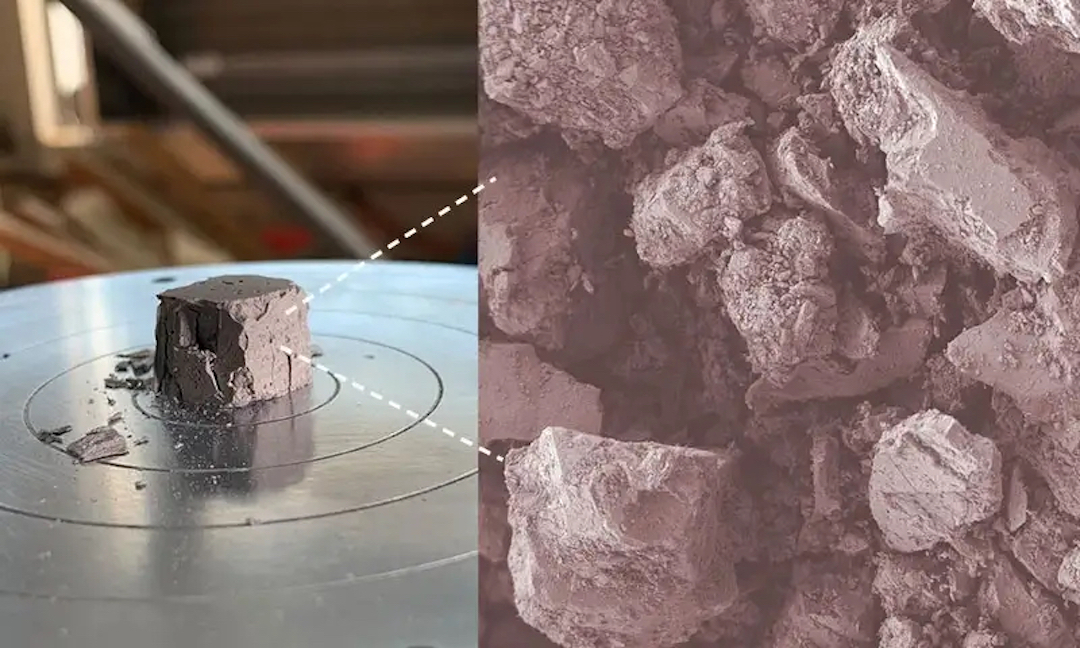
As such, the team of researchers set out to explore the ways the clay-like topsoil retrieved from Mars and the Moon could be used to create “extraterrestrial cement,” which involves finding the correct binder to “glue” the materials together to form geopolymers.
According to the University of Delaware, geopolymers are defined as inorganic polymers that are formed from aluminosilicate minerals found in clay.
When mixed with an alkaline solution, such as sodium silicate, the material then dissolves—freeing the aluminum and silicon to react with other elements and form a new cement structure.
Among the different requirements this material will have to meet, including being sturdy enough to support the weight of any entire building, it must be durable enough to withstand rocket launches, large rocks, and other debris swirling about.
The scientists successfully converted simulated lunar and Martian soil into geopolymer cement, a good alternative to the conventional cement used. There is now a framework where different kinds of geopolymer cements and their characteristics can be compared.
Going forward, the team will continue testing the material in space-like conditions to determine if it remains strong enough in a vacuum, or if it needs to be created in a pressurized environment to ensure it gets stronger.
[via Institution of Mechanical Engineers and University of Delaware, cover image via University of Delware]


