
Literal Hole-In-Wall Café With Bear Paws Is Run By People With Disabilities
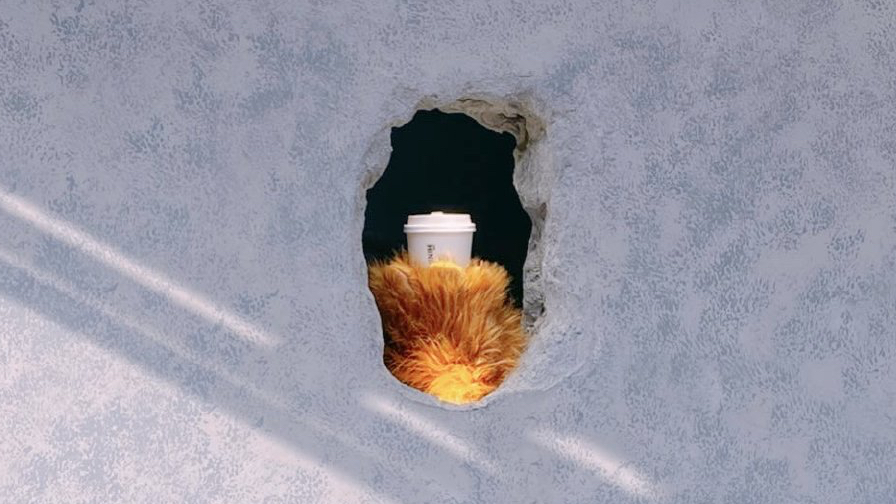
Image via Hinichijou
Face-to-face interaction isn’t the strong suit of this café—but it has paw-to-hand interaction, which is arguably better.
Since it opened in December 2020, Hinichijou in Shanghai has become an object of local fascination. Patrons are served by a bear claw through an actual hole in a wall. They never get to see the face of this friendly barista—or, should we say, bearista?
A cup of coffee, a furry bear claw and a hole in an inconspicuous gray wall can all be seen at a popular new café in #Hangzhou. The employees of the café, who have disabilities, wear a furry bear claw to serve customers through a hole in the wall. #HangzhouStories pic.twitter.com/Uel99tjn7A
— Hangzhoufeel (@hangzhoufeel) May 31, 2021
The concept has been too alluring for many to bear. But wait, there’s more. As noted in a recent profile by the South China Morning Post, the café only hires disabled staff.
Consequently, the ins-and-outs of this quaint spot aren’t like the workflow at a typical café. Employees watch a security monitor from behind the wall to look out for incoming customers, and then point at a nearby QR code with their bear claw to direct guests to the menu.
Customers place their orders via the QR code system, and baristas serve the coffees through the hole. Finally, they shake hands with one another to bid each other farewell.
A Shanghai coffee shop called Hinichijou has gone viral among netizens because of its quirky concept which involves an employee wearing a furry bear claw to serve customers through a hole in the wall. The store is managed by three disabled individuals. pic.twitter.com/p62sIdyhj7
— Ding Congrongä¸ä»Žå®¹ (@Dcr_congrong) December 7, 2020
The café’s co-founder Tian Tian tells the publication that he got the idea to represent employees with a bear claw after meeting two baristas who were uncomfortable with facing people. These are talented individuals who would likely have been turned away elsewhere—one barista, who cannot hear or speak, was the champion of a nationwide disabled baristas competition in 2019; the other is severely burned on the face.
Having become a viral sensation, the small business has since opened eight other branches in Shanghai, with a total of about two dozen employees in its wing.
Hinichijou, which only does takeouts, mostly hires staffers with hearing or speech disabilities. However, it’s now looking to take in more people with visual impairments. There’s already one stand that’s being managed by two blind men.
Tian says that the concept has helped normalize hiring people with hearing and speech disabilities at coffee shops, adding that the deaf community has become “very popular in the local job market.”
Most important of all, what baristas take home is the fulfillment of being independent individuals.
[via South China Morning Post, Sixth Tone, Smart Shanghai, images via various sources]


