
Scientists Successfully Change Blood Type Of Kidneys For Accessible Transplants
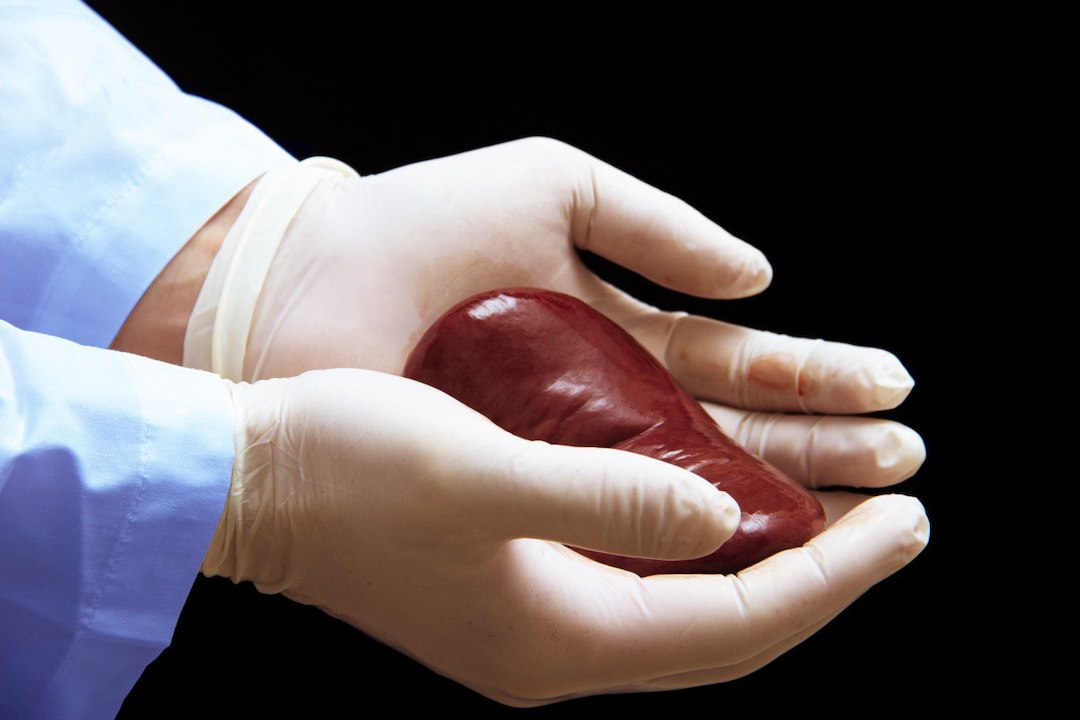
With so many people on the waitlist for a new kidney, it can take months or years before a patient is matched to a suitable donor. And for ethnic minorities, it can be even more difficult to find a correct match in the majority of donated organs.
As such, Professor Mike Nicholson and PhD student Serena MacMillan from the University of Cambridge set out to investigate if it was possible to alter the blood type in a kidney, and have since uncovered a breakthrough that could make matches a whole lot simpler.
Using a normothermic perfusion machine—a device that preserves an organ by passing oxygenated blood though it—the pair decided to flush blood infused with a special enzyme through a kidney.
Incredibly, the enzyme acted as “molecular scissors,” removing the blood type markers lining the blood vessels of the organ, thus turning it into the most common O blood type.
By turning A, B or AB blood type kidneys to the universal O blood type, doctors will now be able to move forward with more transplants that can be used for people of any blood group.
As mentioned earlier, patients from ethnic minority groups often have to wait a year longer for a transplant than Caucasian patients, as they’re more likely to have B-type blood, of which fewer organs are donated.
“After successfully shifting blood group the universal O type, we now need to look at whether our methods can be successful in a clinical setting and ultimately carried through to transplantation,” explains Professor Nicholson.
Calling the research “potentially game-changing,” Dr Aisling McMahon, Executive Director of Research at Kidney Research UK, says that it was “incredibly impressive to see the progress that the team has made in such a short space of time, and we are excited to see the next steps.”
“This research offers a glimmer of hope to over 1,000 people from minority ethnic groups who are waiting for a kidney.”
[via Interesting Engineering and University of Cambridge, cover image via Luuuusa | Dreamstime.com]


