
Near-Transparent Solar Cells Can Be Worn Even On Your Skin
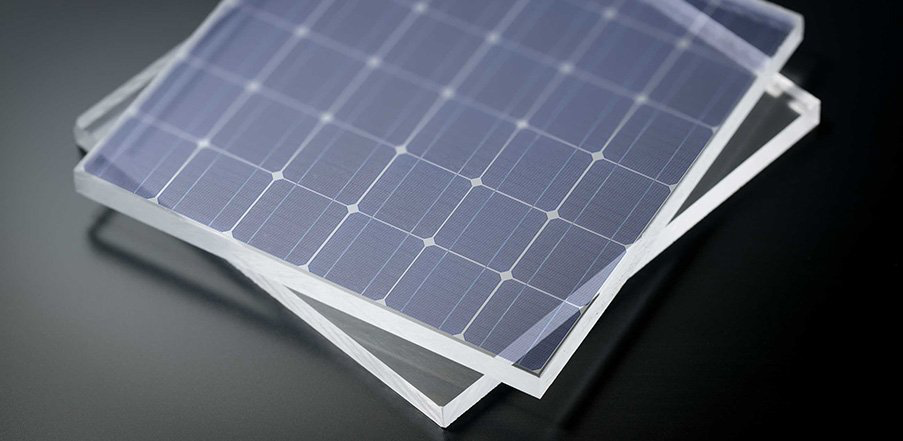
Image via Toshiaki Kato / Tohoku University
The mobile phone started out as a clunky gadget larger than your face. Today, it fits comfortably in your palm and has minimal buttons. Scientists are anticipating for solar cells to follow this route. Currently, these arrays have an unmistakable appearance that might not stick out on many homes. In time, though, they could actually be imperceptible.
Researchers at Tohoku University in Sendai, Japan, have developed near-transparent solar cells with a 2D atomic sheet. The benefits of this material transcend aesthetic perfection—by making it almost invisible, developers foresee solar cells being integrated into everyday life so as to harvest more energy, from doubling as windows to serving as the display of your smartphone. It can even be worn on your skin to potentially act as a wearable power bank for your phone.
The Tohoku University researchers aren’t the first to envision transparent solar cells. In fact, these strips have been the dream of many in the industry. The problem is that scientists haven’t found the right materials to achieve true transparency yet; thus far, the average visible transparency of these solar cells is under 70%.
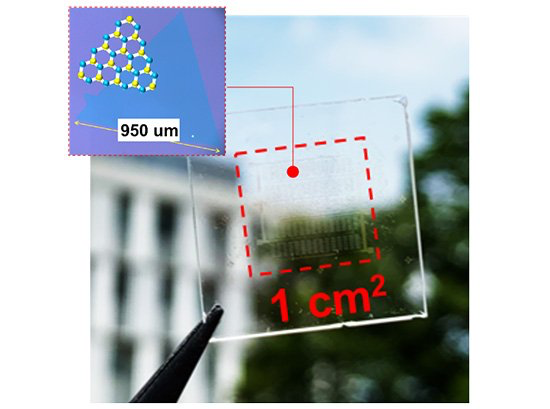
Image via He et al / Scientific Reports (Open Access)
The team, however, has developed a version with an average visible transparency of 79%.
The method is quite technical, but the researchers explain it as follows: The trick is to “[control] the contact barriers between indium tin oxide (ITO),” one of the most-used conducting oxides that are actually transparent, and an inorganic chemical compound called tungsten disulfide. Thin metals cover the ITO, with a thin layer of Tungsten Oxide sandwiched between the ITO and tungsten disulfide.
The next step for the scientists, who have published their findings on the Scientific Reports journal, is to apply the near-transparent solar cells on real solar panels. Who knows? One day, your roof could harness the sun’s power and still look like a roof.
[via The Brighter Side, Inceptive Mind, Tohoku University, images via Tohoku University]


