
Your Future Flatpack Furniture Could Twist Into Shape When Opened
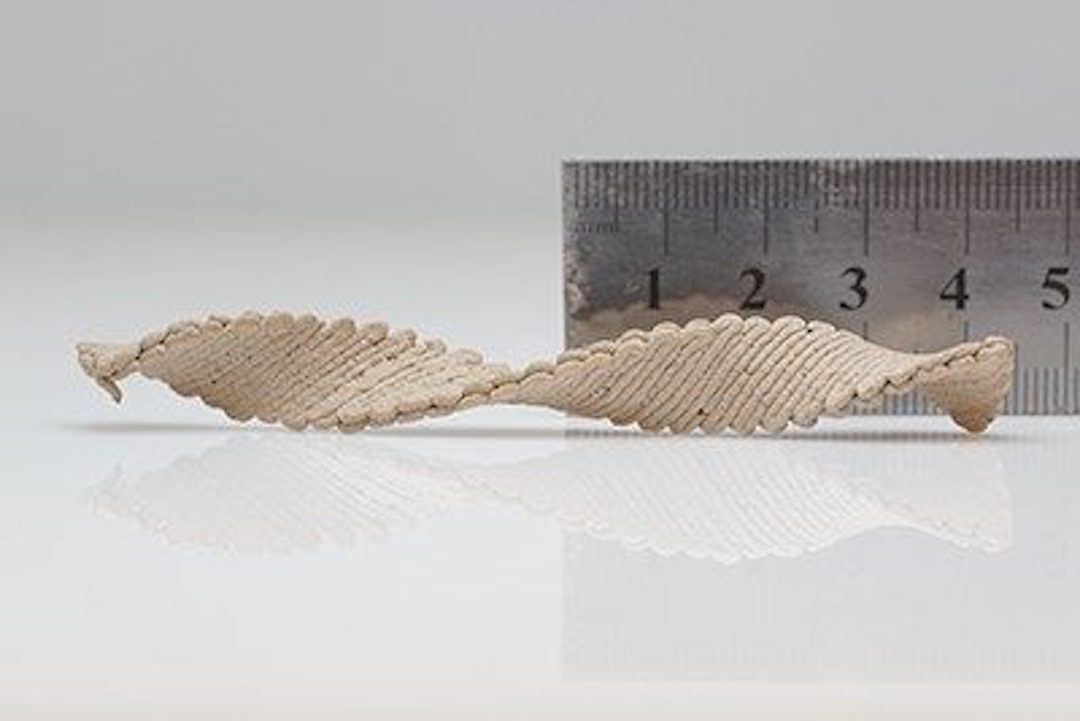
The days of stressing over manuals and lost allen keys could be behind us, thanks to a new form of self-assembly furniture that has been created to literally build itself.
Scientists at The Hebrew University of Jerusalem have discovered a way to 3D-print pieces of wood and simply sit back as they twist into shape on their own.
The process begins with wood shavings that are turned into 3D printer ink. It then transforms into damp, flat pieces that dry into the desired configuration.
The ink, made from wood waste microparticles, is known as “wood flour.” This is then mixed with cellulose nanocrystals and xyloglucan, which have been extracted from plants and turned into a substance ready to be contorted into a different shape.
The technique has zeroed in on a way to control the way the lumber alters as it loses moisture. How the ink is laid down greatly impacts its final appearance. Researchers have found that, for example, a disk of printed ink will dry up into concentric circles and eventually form a concave shave resembling a Pringles potato chip.
When the ink was printed as rays emanating from a source, it dried into a cone.
Printing speed also affects the wood’s final form. The faster the ink is printed, the closer the fibers within the planks are aligned and, thus, a more controlled structure will occur. However, slower speeds mean that those same fibers are placed more randomly in the end product.
As the study goes on, scientists are aiming to combine all the different individual shapes to eventually make furniture. One of the goals is to save space during shipping, as furniture could eventually be sent out as flat packs, and then, when unwrapped, users will be able to watch it spring to life.
[via ScienceDaily and New Scientist, cover image via Doron Kam/The Hebrew University of Jerusalem]


