
Study Affirms People ‘Likely’ Have Similar DNA With Others Who Look Like Them
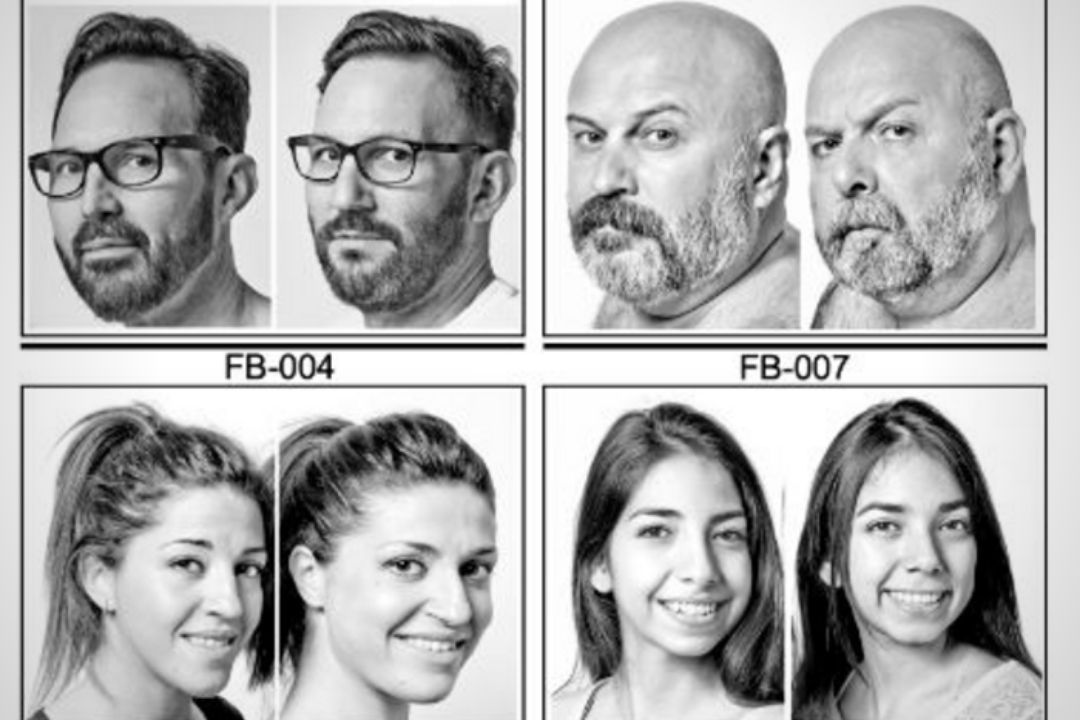
Doppelgängers have long piqued the interest of us humans. I mean, who wouldn’t find it fascinating—if not eerie—to meet someone who looks almost exactly like you?
Now, a new study has found that strong facial similarities among unrelated lookalikes could be associated with shared genetic variants.
“Our study provides a rare insight into human likeness by showing that people with extreme lookalike faces share common genotypes, whereas they are discordant at the epigenome and microbiome levels,” explained Manel Esteller from the Josep Carreras Leukaemia Research Institute.
By analyzing the photographs and DNA of people who look similar, Esteller and his team aimed to characterize, on a molecular level rather than the superficial one we establish with our eyes, if these seemingly “random” human beings shared anything other than just facial features.
To carry out the test, the researchers recruited “human doubles” snapped by photographer François Brunelle, who has been collecting pictures of doppelgängers since 1999.
By looking at the headshot of 32 pairs, the team determined a measure of likeness through three different facial recognition algorithms.
Additionally, the participants were tasked to complete a comprehensive biometric and lifestyle questionnaire and provided saliva for DNA analysis.
In the end, the findings showed that the lookalike pairings did share similar genotypes, but differed in DNA methylation and microbe landscapes.
Nine of the 16 pairs of doppelgängers were clustered together, with physical traits including height and weight, and behavioral traits like smoking and education status correlating between the two.
As such, not only do those who look similar share similar genetic material, but they probably have common habits and behavioral patterns too.
“We provided a unique insight into the molecular characteristics that potentially influence the construction of the human face. We suggest that these same detriments correlate with both physical and behavioral attributes that constitute human beings,” Esteller concluded.
“These results will have future implications in forensic medicine—reconstructing the criminal’s face from DNA—and in genetic diagnosis—the photo of the patient’s face will already give you clues as to which genome he or she has,” he added.
[via Interesting Engineering and Cell Press /EurekAlert, cover image via François Brunelle (CC BY SA)]


