
Humankind Might Be Millions Of Years Older Than Previously Thought
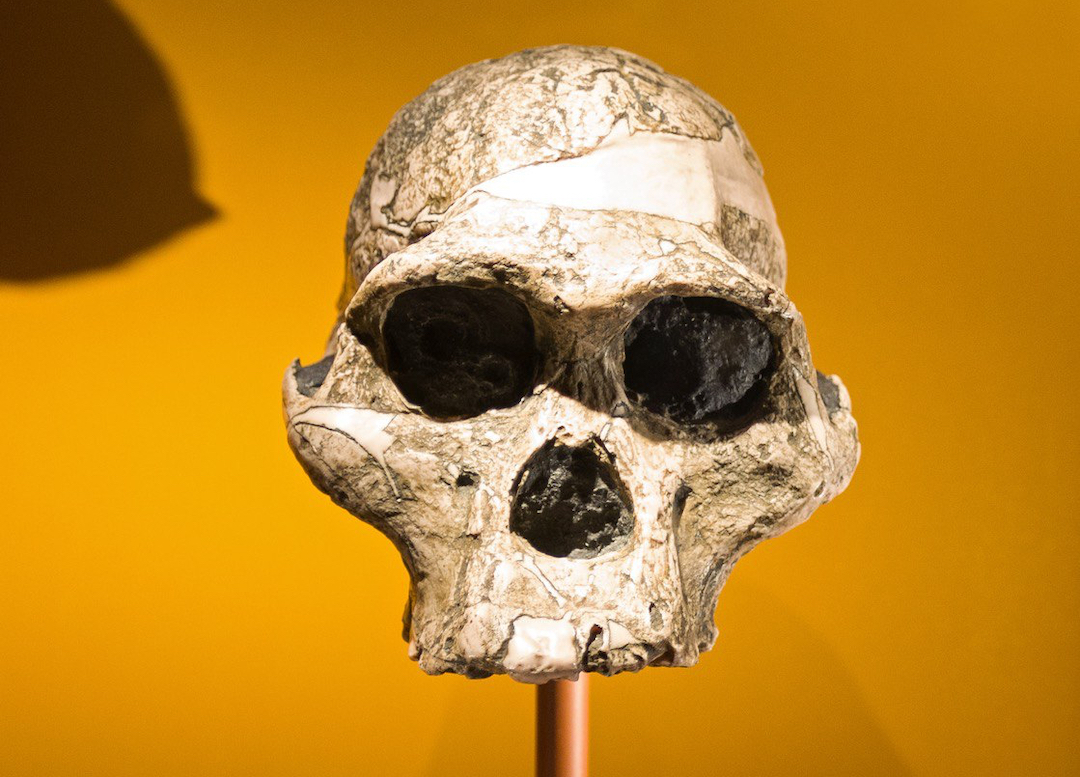
The origins of the human species may be changing as we know it. It has long been believed that Homo sapiens first walked the earth about 200,000 years ago, but a new study suggests human-like civilizations have existed a million years earlier.
A research team from Purdue University, led by researcher Darryl Granger, has gone back down into the depths of the Sterkfontein Caves in Africa to reexamine the fossils that lie within.
These caves, also known as the ‘Cradle of Humanity’, are where the first trailings of ancient humans were first found.
The research team, which also includes scientists from the University of Witwatersrand in Johannesburg and the University of Toulouse Jean Jaurès, brought with them new technology to examine the plethora of Australopithecus remains that can be found inside the cave.
The skeletal remains, however, are usually notoriously hard to determine the age of. Nevertheless, via a study published in PNAS, the team utilized accelerator mass spectrometry to examine the nuclides in the rocks. That is being topped off with geological mapping to better understand how rock sediments shifted through the millenniums.
With that, the scientists were able to find that the previously found fossils from Sterkfontein, which include a ‘Mrs Ples’ skull and the full skeleton known as ‘Little Foot’, both contain human traces that date back even further than the first human we know of, ‘Lucy’.
Lucy, as of right now, goes back 3.2 million years. However, this new discovery places Mrs Ples and Little Foot between 3.4 and 3.7 million years old. Previously, both had been assumed to only date back to between two and 2.5 million years.
According to the study, Granger hopes that this finding will lead to more accurate discoveries. This new revelation could eventually give us a better understanding of where we came from and who we are as people.
[via Hyperallergic and Purdue University, Photo 121496852 © Jaroslav Moravcik | Dreamstime.com]


