
Polystyrene Boxes Get Recycled After Meals Into Functional Seaweed Chemical
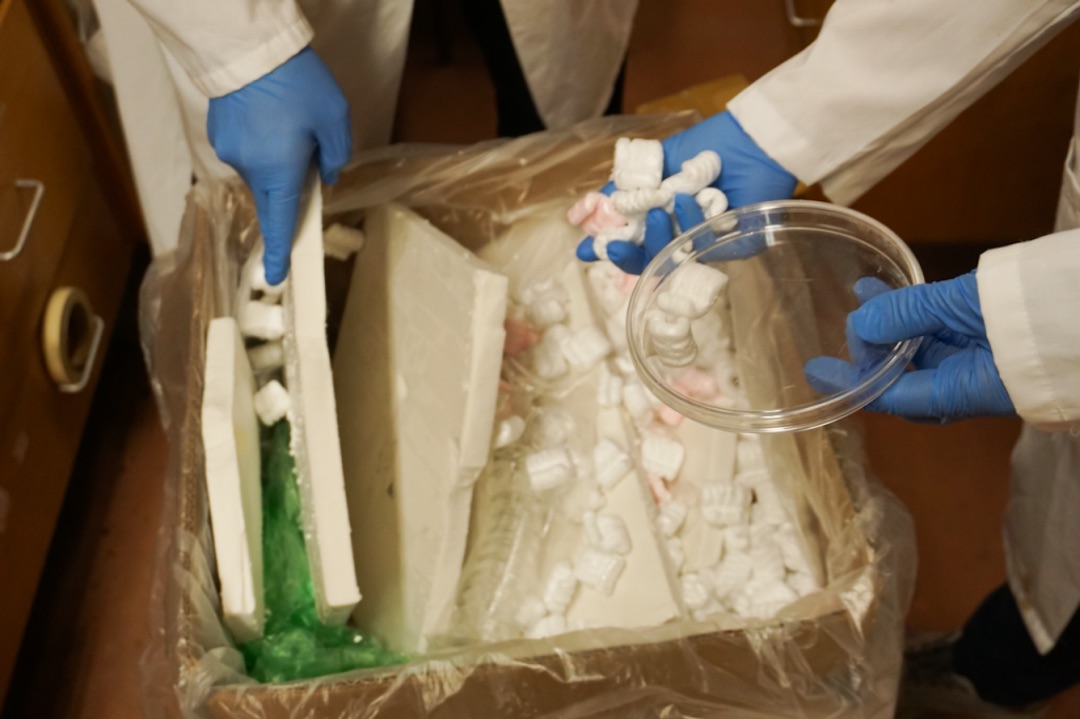
Takeout boxes as, we know them, are being given a second lease on life by being turned into an important chemical found in the makeup of seaweed.
Polystyrene—often referred to by their trademarked name, styrofoam—is a material that is notoriously hard to recycle. Previously, designers have found a way to turn it into furniture. Now, that may look cool, but not everyone wants to live in a house filled with squishy gray couches and tables. So, what next?
A team at Virginia Tech has discovered that by placing polystyrene under direct sunlight, the material can be broken down until it reaches a state called DPM (diphenylmethane). This chemical, which is typically drawn from seaweed, has a variety of applications like medicine and beauty products, including perfume.
Polystyrene packaging is created by blasting small plastic balls that expand and become bound together. Due to its nature, it can’t be destroyed easily.
But when researchers shone a UV light and a chemical compound onto the packaging material, it yellowed and eventually disintegrated, leaving behind DPM.
According to a paper published in PNAS, DPM has a market rate 10 times higher than any other byproduct of salvaging polystyrene.
The team double-checked their findings with business experts from Santa Clara University and Dongbei University in China to ensure that the end product would provide economic value to recycling plants and governments. The study eventually showed that the cost of upcycling the substance will provide great profits.
It’s normally not advisable to place polystyrene into recycling bins as it would be too much of an economical burden to process. Hopefully, with this discovery, waste facilities will finally find a reason to handle the ever-indestructible takeout boxes.
[via Good News Network and Metro UK, cover image via Reilly Henson, Virginia Tech]


