
James Webb Telescope Snaps Incredible Images Of ‘Space Tarantula’
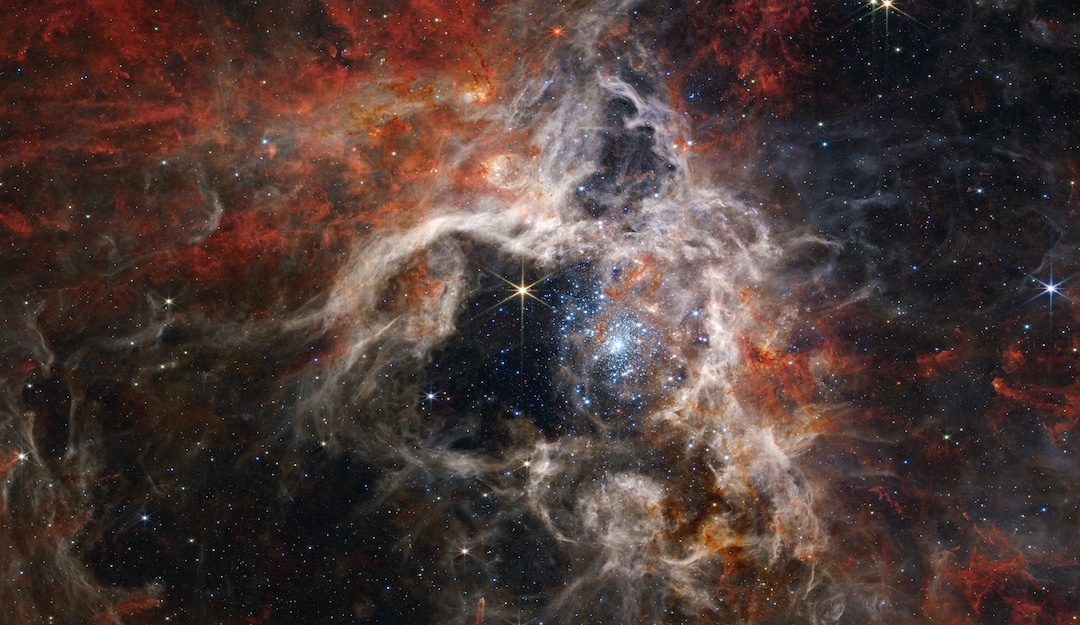
NASA’s James Webb Space Telescope has shot its fair share of stunning images, from Jupiter’s mesmerizing auroras to nebulas and even the deepest, crispest image ever of our universe.
Now, the US$10 billion observatory has done it again, by using its Near-Infrared Camera (NIRCam) to form a mosaic image of the Tarantula Nebular star-forming region, shedding light on tens of thousands of never-before-seen stars.
The nebula, which was nicknamed ‘Tarantula’ for dusty filaments present in previous telescopic pictures, has long been an important point for astronomers to study star formation.
Even at 161,000 light years away, researchers have managed to make out the shape of a spider, with the formation resembling the arachnid burrowing its home, lined with silk.
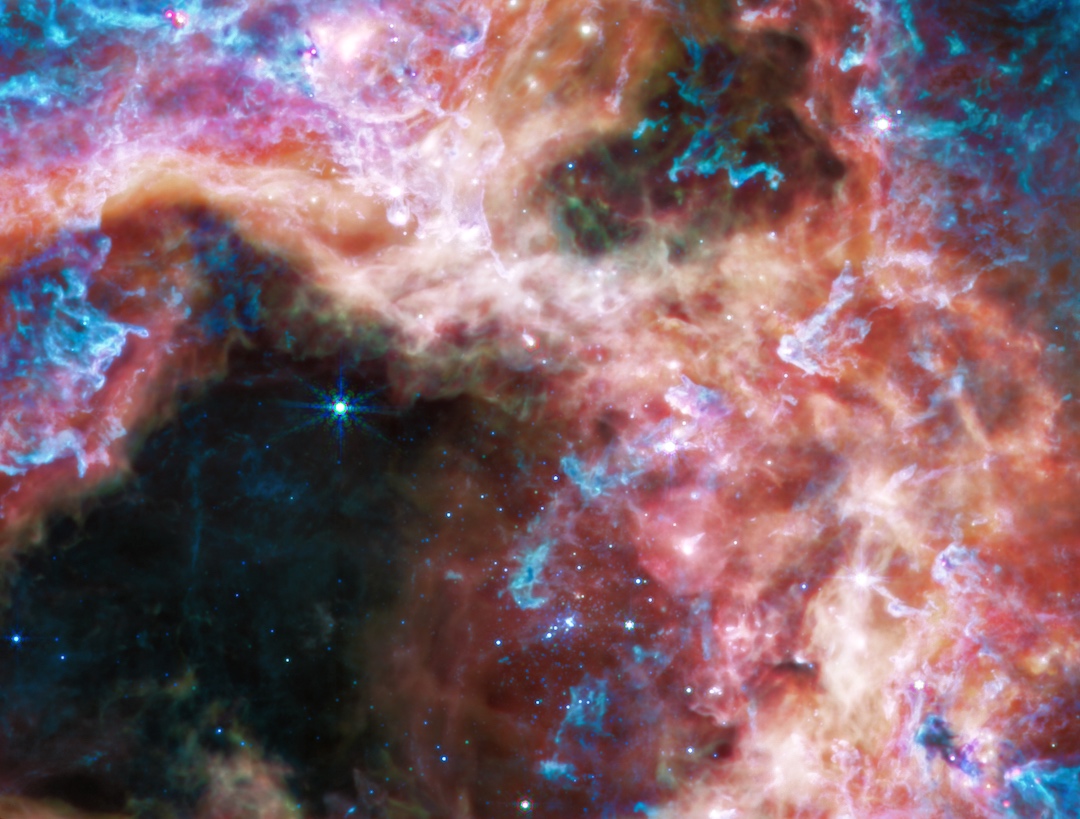
On the Mid-Infrared Instrument, researchers were able to see the cooler gas and dust glow more obviously as the hot stars faded, with the Tarantula Nebula having the same type of chemical composition in its gigantic star-forming regions in the early days of our galaxy.
Going forward, NASA hopes its astronomers will have the opportunity to compare and contrast the formations in the Tarantula Nebula with the telescope’s image of the distant galaxies formed during Cosmic Noon—the time when our universe was at its peak of star formation billions of years ago.
“Despite humanity’s thousands of years of stargazing, the star-formation process still holds many mysteries—many of them due to our previous inability to get crisp images of what was happening behind the thick clouds of stellar nurseries,” the team said in a statement.
“Webb has already begun revealing a universe never seen before, and is only getting started on rewriting the stellar creation story.”
[via CNN and NASA, images via NASA, ESA, CSA, STScI, Webb ERO Production Team]


