
Astronauts Could One Day 3D-Print Tools Using Martian Dust And Titanium
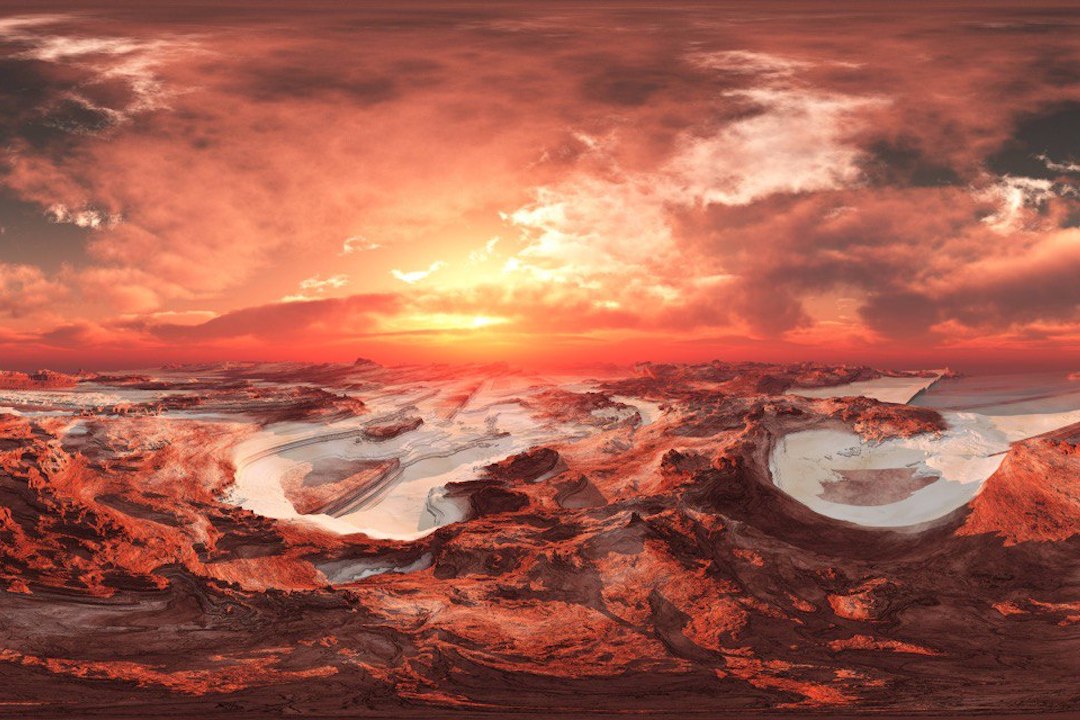
In the future, astronauts on Mars could be tasked to 3D-print their own tools or rocket parts, with scientists recently discovering a mix of crushed Martian rock and titanium alloy resulted in an unexpected strong, high-performance material.
Researchers at the Washington State University (WSU) tried the combination with as little as 5% to as much as 100% of Martian regolith—a black powder mimicking the rocky surface of the Red Planet.
Intriguingly, the results showed that the parts created with 5% Martian regolith proved to be sturdy, while those made entirely out of regolith were brittle and prone to damage.
Despite the brittleness of the high-Martian content materials, the team still believes it could be useful. For example, instead of making parts out of the mixture, it may be used in the form of coating to protect important equipment from rust or radiation damage.
“In space, 3D-printing is something that has to happen if we want to think of a manned mission because we really cannot carry everything from here. And if we forgot something, we cannot come back to get it,” Professor Amit Bandyopadhyay, from the WSU School of Mechanical and Materials Engineering, explained.
It’s hardly a surprise that transporting heavy loads into space will be an expensive endeavor, considering it costs US$54,000 to just add 1 kg (2.2 lbs) onto a NASA space shuttle.
Plus, if the astronauts are scheduled for a long-haul stay on Mars, they need to be able to repair any their accommodation, rocket parts, or gadgets with materials available on the planet.
Going forward, the team hopes to delve further into the research, and possibly yield better composites by trialing different metals and 3D-printing techniques.
“This establishes that it is possible, and maybe we should think in this direction because it’s not just making plastic parts which are weak, but metal-ceramic composite parts which are strong and can be used for any kind of structural parts,” the study concluded.
[via New Atlas and Washington State University, cover image via Stanislav Rykunov | Dreamstime.com]


