
Diamonds From A Dwarf Planet That Crashed To Earth Have Been Discovered
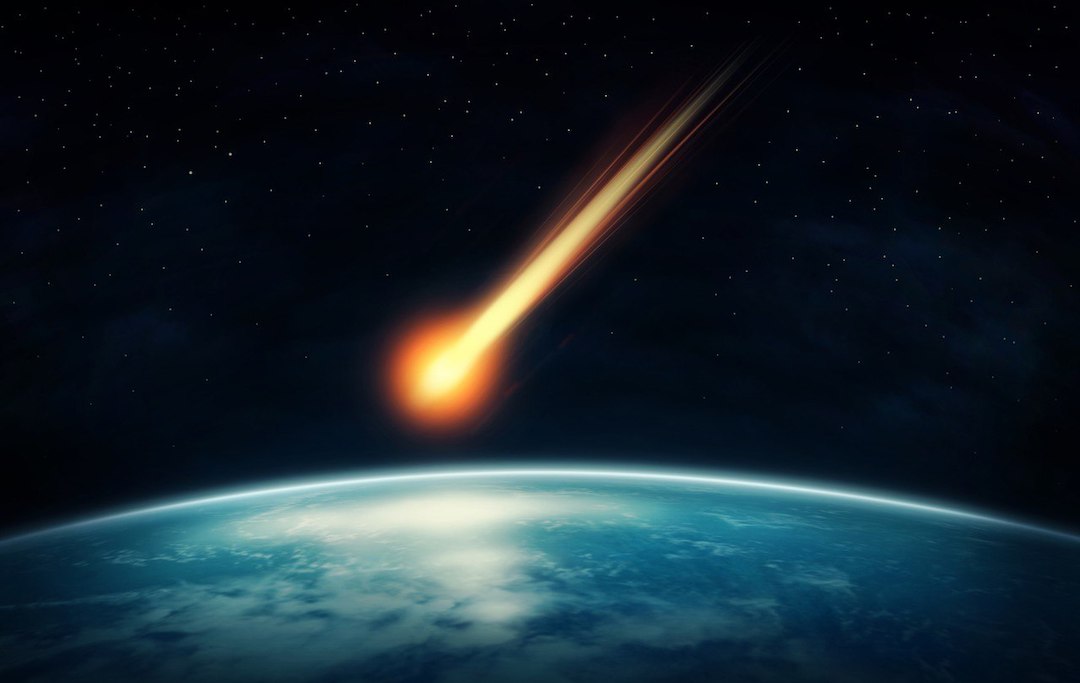
A collision that occurred 4.5 million years ago created diamonds from a material unknown to Earth.
The mysterious crystal, known formally as lonsdaleite, is a hexagonal diamond roughly 58% tougher than the ones found native to Earth. This type of mineral was first discovered in 1967 and is most notably found in rare ureilite meteorites such as the Canyon Diablo, Kenna, and Allan Hills 77283.
The scientists at RMIT University first published their findings in the Proceedings of the National Academy of Sciences (PNAS), driving scientists to rethink how the diamond actually took shape.
Lonsdaleite was originally believed to have formed at the point of contact between the dwarf planet and Earth, which scientists took to understand that this crystal did not form naturally on our own planet.
However, the study recently performed by the team notes that lonsdaleite was actually formed after the crash on Earth 4.5 million years ago. This means that, thanks to the conditions of the collision, lonsdaleite was brought to life right on Earth.
Aside from this, the new research concludes that the latest unearthing of lonsdaleite is also the largest-ever found. The study states that it measures a micron in size—for context, a human hair is about 70 microns in width.
A geologist from Monash University, Andy Tomkins, said that it was likely the gem was created by a supercritical fluid found in the exoplanet that experienced high temperatures and moderate pressure in the space rocks to birth the cosmic crystal. This essentially means that the conditions could be reproduced in a lab.
This would make big strides in the industrial and mining sectors as the researchers believe that if the replication is successful, it could replace diamonds to create incredibly hard parts for machinery.
[via Futurism and SciTechDaily, Photo 44503053 © Elena Schweitzer | Dreamstime.com]


