
Battery-Free, Wireless Underwater Camera Rides On Sound Waves To Capture Images
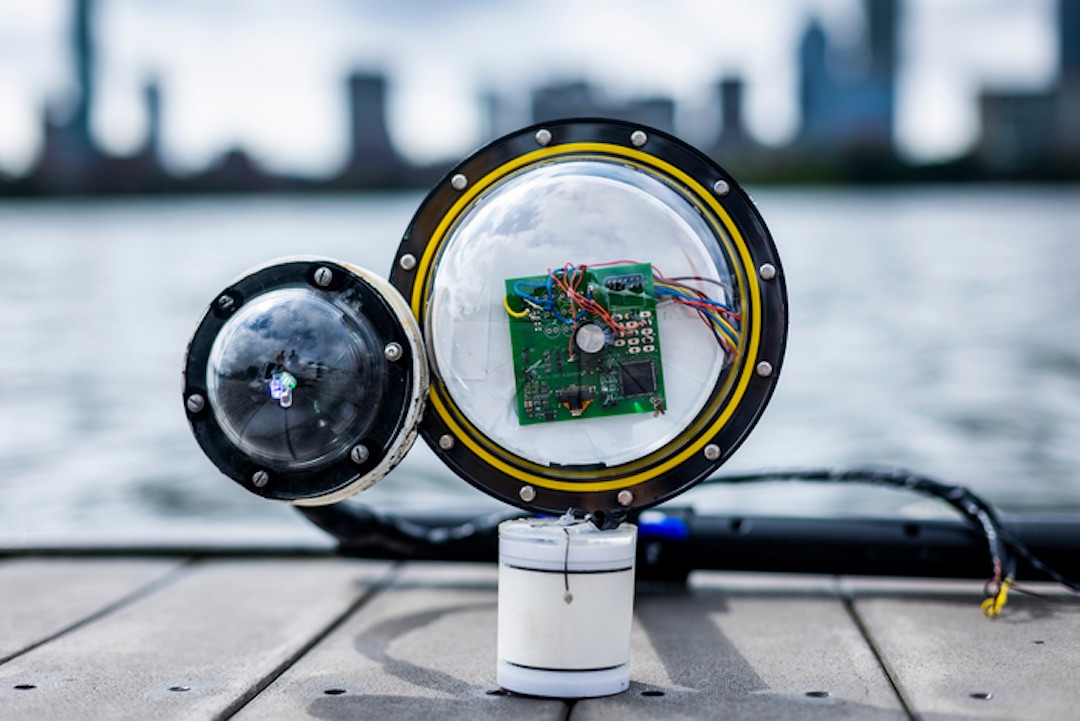
Deep sea photography may soon become more accessible, thanks to engineers from the Massachusetts Institute of Technology (MIT) who devised a camera sans the need for batteries and wires. Instead, this innovative device relies on sound waves to power itself up.
According to the study published in the Nature Communications journal, the crux of how this camera works is that soundwaves within the ocean are turned into electrical and mechanical power. Once enough energy has been generated, it can snap photos under the water.
To build such a gadget, the team used transducers made from piezoelectric materials placed on its exterior. This unique material can churn a mechanical force into an electric signal, such as a wave hitting it.
An ultra-low-power imaging sensor and a low-powered flash were built into the device to keep energy consumption low. Unfortunately, this meant that only grayscale images could be captured.
Red, green, and blue LED lights were attached to eliminate this issue. When a picture is taken, the lights will start to flash and emit color over the white areas of the render.
Using a process known as ‘underwater backscatter’, image data, whenever captured, gets encoded as bits (1s and 0s) and sent to a receiver which transmits sound waves to the camera through the water.
The camera then functions either as a mirror to reflect the waves to the receiver or as an absorber. A hydrophone senses if a signal is returned, registering it as bit-1 if so, or bit-0 if otherwise. This binary information is then used to reconstruct the image.
The autonomous device was first tested in a pond in New Hampshire, where it shot colorful imagery of bottles. It also captured an underwater plant known as Aponogeton Ulvaeus, which grows in a dark environment.
The team hopes to extend its range so it can dive to new depths and reach places we humans cannot. According to US National Ocean Service, more than 80% of the ocean is “unmapped, unobserved, and unexplored”, so this camera holds a lot of promise in unlocking a world of discoveries.
Beyond exploration efforts, the scientists also look to deploy the gadget for monitoring climate change’s effects from within the ocean.
[via TechXplore and MIT News, cover image via Adam Glanzam, MIT]


