
World’s Whitest Paint Could Soon Be Used To Keep Cars & Planes Cool
Scientists at Purdue University have set out to perfect a white paint that not only eliminates the need for air conditioning for buildings, but also cools down cars, planes, and even rockets.
Cooling white paint has been around for a while, mainly used in construction to keep structures at lower temperatures. Often it’s made with barium sulfate of different particle sizes that can scatter varying wavelengths of heat emitted from the sun.
Previously, the university had taken the record for the world’s whitest paint, earning itself a spot in the Guinness World Records. This iteration of the pigment could reflect 80% to 90% of the sun’s rays and lower temperatures by 40°F. Ultimately, this reduced the amount of energy needed to keep the interiors of these buildings from overheating.
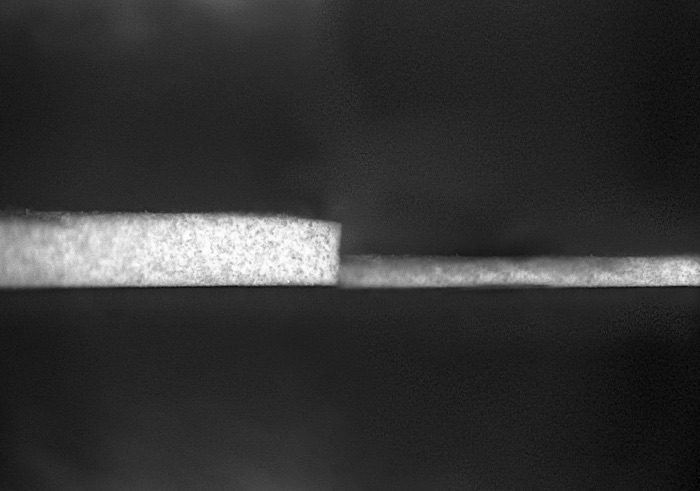
However, to do so, this dye had to be painted on at a thickness of 0.4 millimeters. This may not seem like much, but this diminishes its viability to be used on automobiles or spacecrafts as it will impact performance and speed.
As such, Purdue University has decided to rectify the problem. In a paper published in Cell Reports Physical Science, the university noted that it now uses hexagonal boron nitride—commonly found in lubricants—to replace barium sulfate. This new formula allowed the paint to reflect up to 97.1% of the sun’s rays with just a thickness of 0.15 millimeters.
The image below depicts the difference between the old formula and the new one created by the research team.
In addition, the new dye is incredibly porous and weighs 80% less than previous versions.
The research team notes that the paint still has a lot of kinks to work out, but they are talking about commercializing it.
If—or when—this takes to market, the implications for future use in planes and cars could immensely help reduce the need for climate control systems currently in place to keep these vehicles cool.
[via Gizmodo and Purdue University, images via various sources]


