
NASA Creates 12-Year Timelapses Charting The Changes Of Our Night Sky
If you look up at the night sky now, you might not notice if there’s anything different from when you looked up, say, 12 years ago. The moon still rises and sets, as it should. The big dipper is where it always is, and so are Orion and the North Star.
The main reason you can’t see these changes, though, is that objects in our universe emit infrared light, which is at a frequency that is too high for the naked eye.
However, the universe is constantly transforming in ways we cannot see. So to capture the motion of our galaxy, NASA sent out a satellite back in 2009 and a refurbished mission craft again in 2013 that charted a course to capture our ever-changing cosmos.
The NEOWISE—or the Near-Earth Object Wide Field Infrared Survey Explorer—completes half a journey around the Sun every six months, and as it goes, it takes pictures of our galaxy. Since its launch, it has sent back 18 images down to Earth.
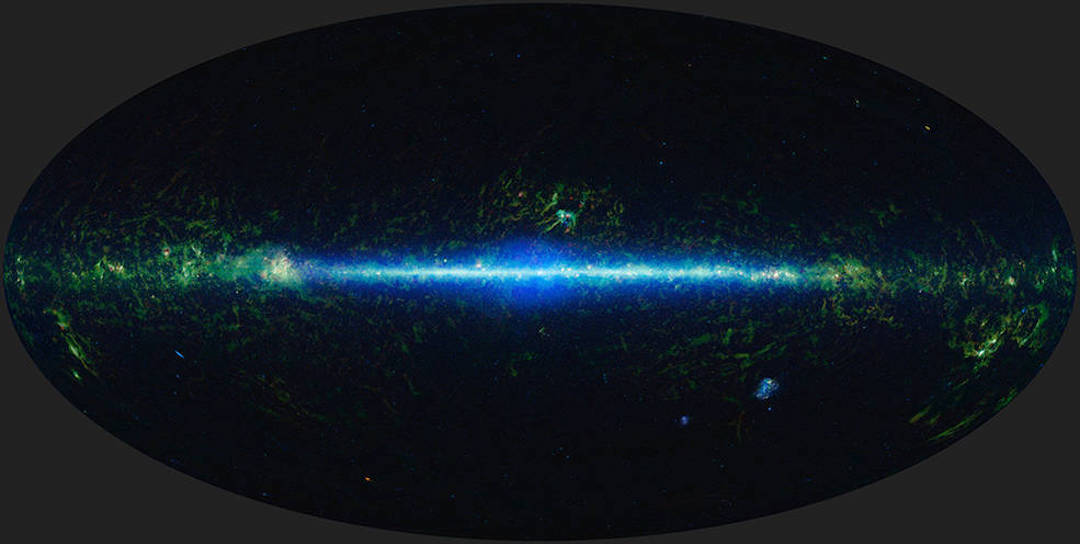
Scientists at NASA have then brought these renders and stitched them together to create an “all-sky” map of our cosmos which spans over a decade.
Along with an image, NASA has provided a video of various “timelapse movies” compiled together to demonstrate how particular objects in our universe have changed over the last 12 years.
In the galactic portrait, NEOWISE captured a black hole pulling gas into itself as it ate a star. Also in the picture is a supernova reaching the end of its life, as you can see it “pulsating” with the last dregs of its energy.
NASA notes that for the last decade or so, NEOWISE has found 158,000 minor planets. Of these, 34,000 have never been discovered before. The maps have been an incredible tool to the space team, and it notes that it has since provided researchers with a better understanding of black holes.
Below is an illustration of the craft orbiting Earth.
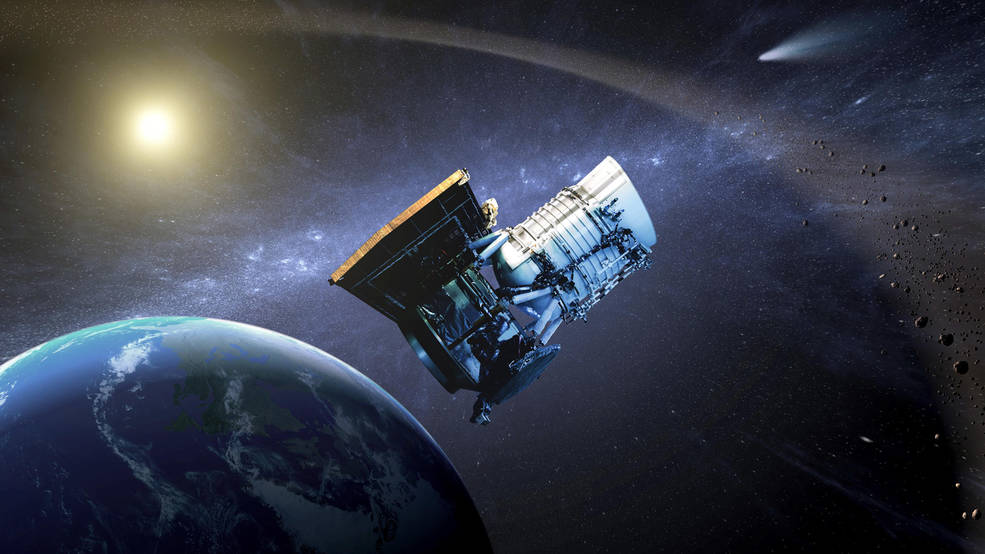
NEOWISE initially began as WISE—Wide-Field Infrared Survey Explorer—as it was sent out to scan the sky in infrared for asteroids, stars, and distant galaxies. Unfortunately, by February 2011, it ran out of coolant, which was needed for infrared observations. However, scientists later found that the infrared was still functional, and its mission resumed by December 2013 as a repurposed NEOWISE.
[via DIY Photography and PetaPixel, images via NASA/JPL-Caltech/UCLA]


