
FDA Officially Approves To Philips’ Tumor-Detecting Artificial Intelligence MRI

In a breakthrough for cancer radiotherapy imaging, the US Food and Drug Administration recently greenlighted Philips’ latest MRCAT Head and Neck radiotherapy application powered by artificial intelligence.
With machine learning, the pioneering technology will be able to use MR as the sole or primary imaging mode when treating soft tissue tumors located in patients’ head, neck, brain, pelvis, or prostate.
According to Interesting Engineering, this means oncologists will no longer need to use a CT scan on patients, with the new AI software being able to render images with similar accuracy and resolution to the usual scans in under three minutes.
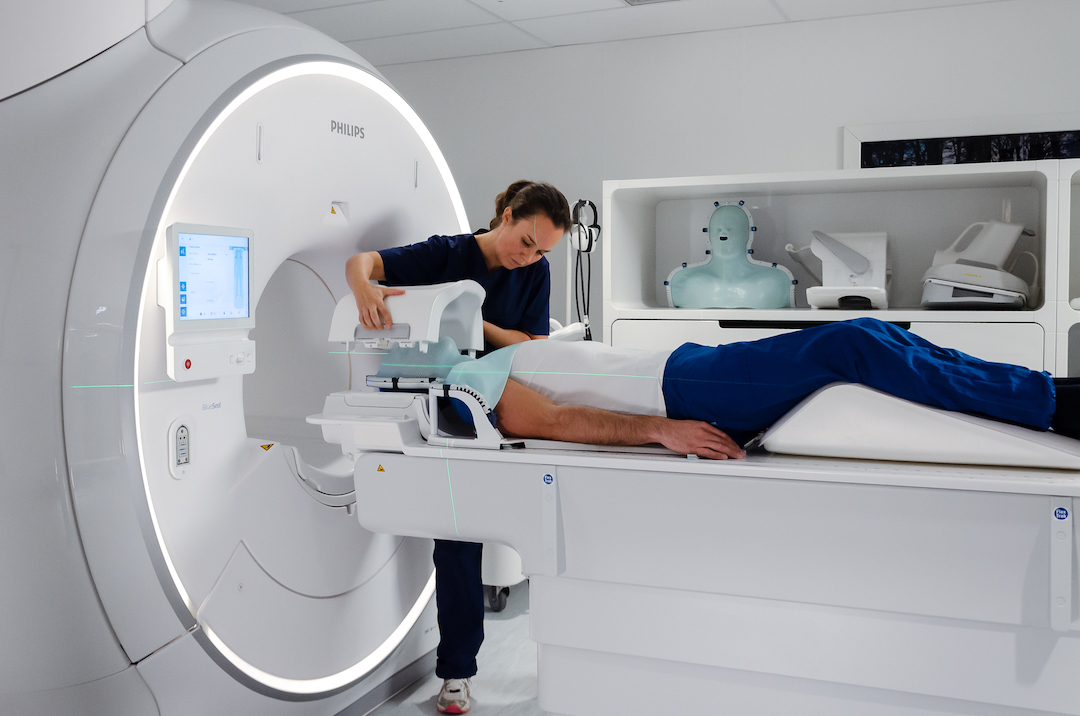
In addition, the company announced it has made its MR Head Neck Coil compatible with MacroMedics’ latest Double Shell Positioning System, giving individuals undergoing treatment a more comfortable experience with greater accuracy.
“The superior soft tissue imaging of MR together with advances in the integration and orchestration of data, including the use of artificial intelligence, promise greater clarity and less subjectivity in planning radiotherapy for head and neck cancer,” explained Ilya Gipp, Chief Medical Officer Oncology Solutions at Philips.
Going forward, the firm hopes its advanced imaging solutions and powerful AI algorithms will help oncologists worldwide treat patients more confidently and deliver more precise, adaptive, and personalized treatment plans.
[via Interesting Engineering and Philips, images via Philips]


