
NASA Is Determined To Break The Sound Barrier Once Again, This Time Quietly
In 1947, pilot Chuck Yager made history by breaking the sound barrier while flying the Bell X-1 plane. Yager and the team took to the skies and revved up the aircraft’s engine to reach a speed faster than the speed of sound. And as he did so, the tremendous sound of the sonic boom thundered.
This time it has set up a new mission team known as Quiet SuperSonic Technology (QueSST). The new goal is to break the sound barrier again, this time quietly.
The sonic boom ultimately dampened innovation for supersonic flight to take off in the commercial sector. That, coupled with sonic flying being banned over the rest of Nixon’s presidency. Such technology also needed flights to be taken over the oceans, and the development lost momentum as there weren’t many routes.
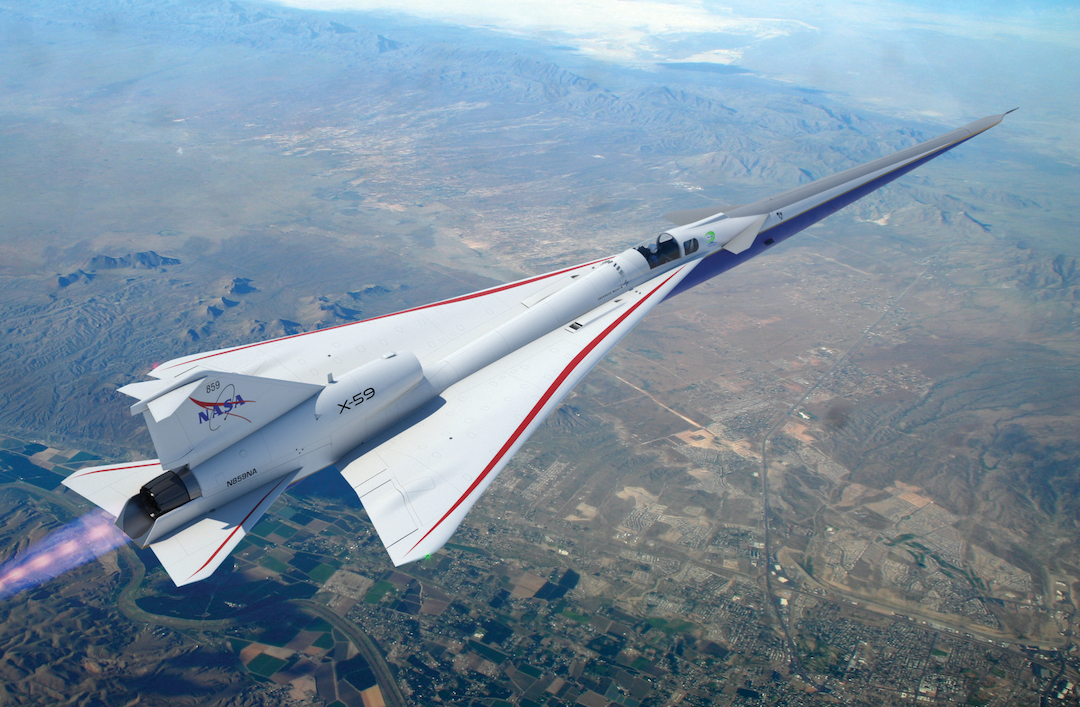
The only time we saw anything close to it was when the Concorde launched and eventually stopped in 2003. And though the Overture Jet is set to take over the operation, NASA is entering the ring with its new X-59.
The jet is modeled after the X-1 and employs new technology that softens that iconic “thump” sound emitted once the craft reaches a speed faster than sound. In addition, this revised version of the plane lowers the noise intensity by changing the aircraft’s shape.
The project includes flying the X-59 over communities instead of just oceans to test if people can hear the jet overhead. This is in an attempt to get authorities, such as the Federal Aviation Administration (FAA), to lift the ban on supersonic flyers.
X-59 is set to make history once again in early 2023. And if all goes well, you could be zooming at the speed of sound to get to your next vacation.
[via Universe Today and NASA, cover image via Lockheed Martin]


