
‘How Much Press Are You Worth?’ Estimates Coverage You’ll Get If You’re Missing
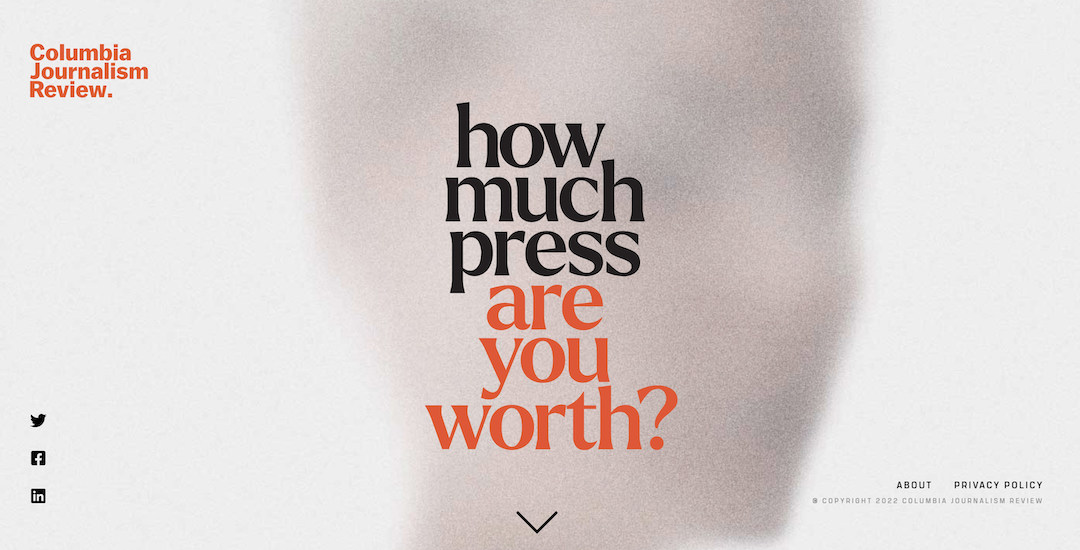
Aiming to address the biases present in the media, the Columbia Journalism Review (CJR) has launched a campaign—#EveryoneIsPressWorthy—to highlight the differences in how missing people are covered in the news depending on their “press value.”
By allowing each person to calculate this intangible value, the organization hopes to cast a spotlight on the vast disparity in how much attention one receives in the press should they go missing, depending on their race, gender, and location.
With the sobering realization that who you are and what you look like could possibly determine the likelihood of being found, CJR hopes more attention will be brought to the systemic issue of biases and inequities still present within today’s newsrooms.
To set up the press coverage calculator, the agency based its model on a sample of 3,630 news stories about missing persons collected from January to November 2021. Of these, 2,383 stories were of one or more specific persons, with over 735 unique individuals categorized by age, gender, ethnicity, and geographic location.
In one striking example, the algorithm showed that a young, white adult woman who goes missing in New York will potentially feature in 67 stories, while a Latino male of the same age would only appear in 17.
Results for minorities in other age groups fared worse, with a missing middle-aged Black man only expected to receive four or five mentions in the media. The stark contrast certainly emphasizes the need for change.
“The coverage of missing people is a high-profile example of an even bigger problem. We’re hoping to force a recognition, where systemic coverage gaps exist,” summed up Kyle Pope, Editor of CJR.
[via LBB Online and Columbia Journalism Review / PR Newswire, cover image via Columbia Journalism Review / PR Newswire]


