
Researchers Discover Soybeans Could Be Key To Improving Asphalt Roads
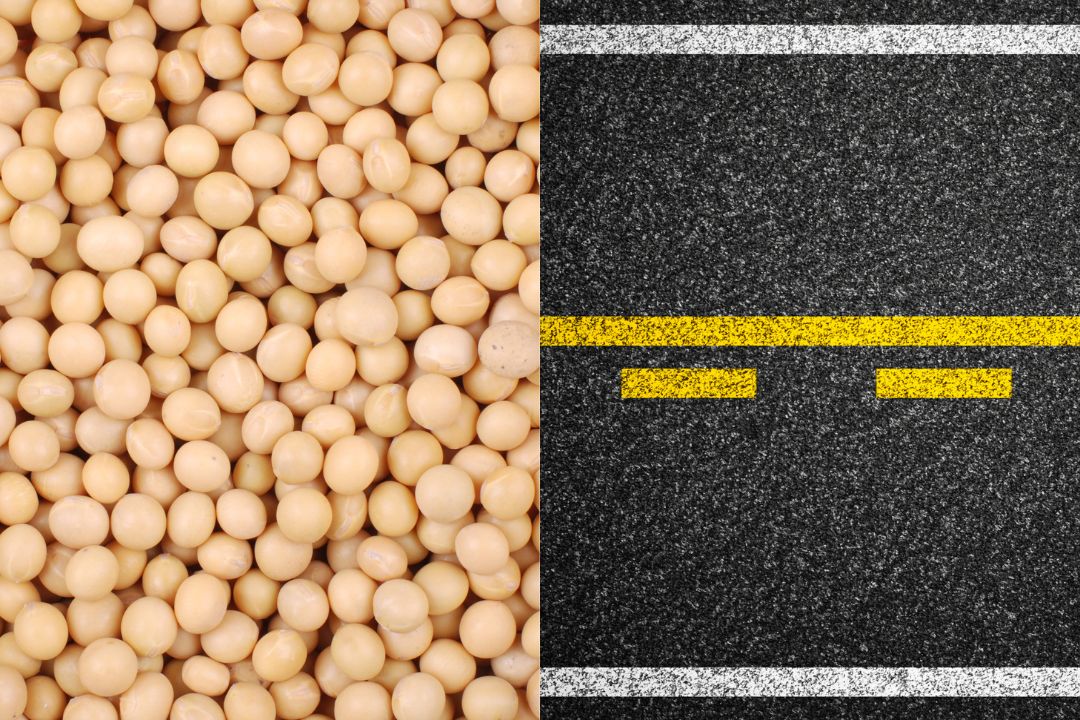
Soybeans can do much more than act as a dairy replacement or be turned into meat-free foods. In fact, researchers at Iowa State University have found a little-known use for the ingredient: extending the life of asphalt roads.
Traditionally, synthetic rubber—known as polybutadiene—is added onto the asphalt to make it deal with cracks and make roads more durable. The problem is, however, that the petroleum-based material and its counterparts are carcinogenic and harmful to the environment.
As such, the scientists set out to use soybeans as a cleaner, more eco-friendly alternative, developing a process by which soybean oil could be converted into a biopolymer that mimicked the properties of polybutadiene.
Initially, it didn’t seem that the new biopolymer would be feasible, considering the entire process took over 24 hours. But now, with a new system dubbed ‘Poly100’, the material can be produced in one reactor, with zero volatile chemicals and waste.
Currently, the biopolymer is being sold by spin-off company SoyLei Innovations under the name BioMAG. Other products have emerged from the process, including a line of items that increases flexibility in pavements, and one that extends the life of roofing shingles.
It’s important to note, as New Atlas points out, that while soybeans are a better alternative to petroleum-based materials, environmental activists still have concerns about farming practices.
This is because a majority of the world’s soybeans are grown in Brazil, where large swathes of forests have been cut down to make way for farms. Shipping soybeans to other countries contribute to carbon emissions, as well.
[via New Atlas and Iowa State University, cover image via Bendao | Dreamstime.com and Andreykuzmin | Dreamstime.com]


