
‘Crude Imitation’ Rembrandt At The Hague Now Declared A ‘Brilliant’ Original
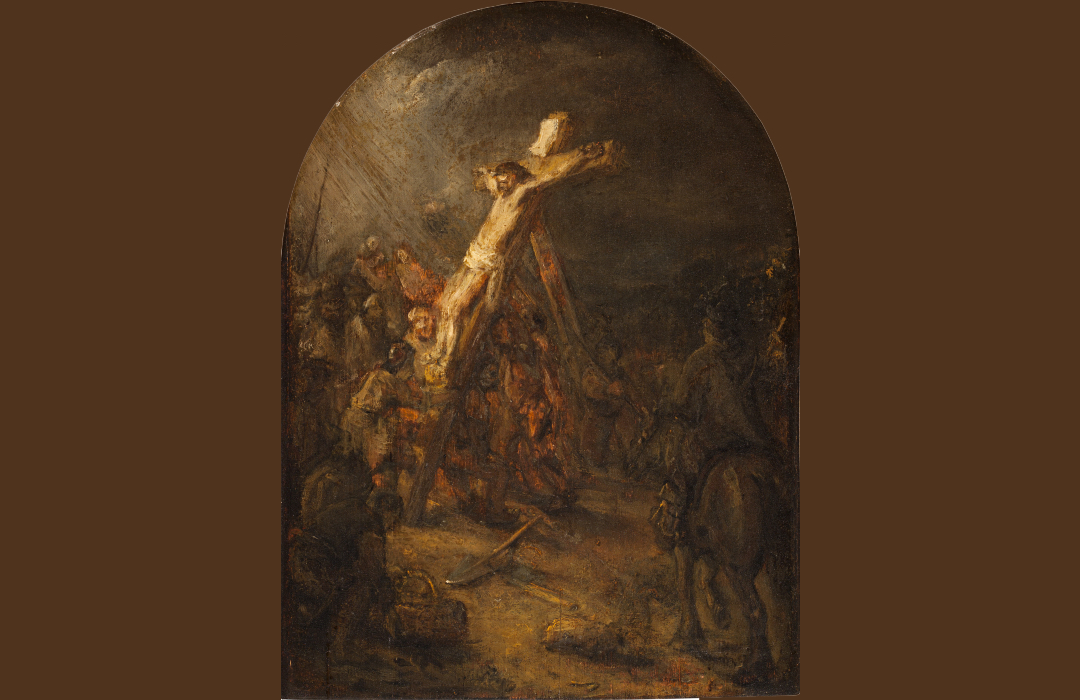
Rembrandt van Rijn’s Raising of the Cross (1930s). Image via Museum Bredius / Wikimedia Commons (public domain)
Dutch Golden Age painter Rembrandt van Rijn, whose play on light and shadow has been revered for centuries, would have been absolutely peeved had he heard his work was perceived as a “crude imitation.”
Unfortunately, this was the sentiment surrounding The Raising of the Cross oil sketch for years as it was sitting in a quiet corner at the Museum Bredius in The Hague. The work was purchased by the museum’s first curator Abraham Bredius in 1921 and has been on display since. Bredius believed the art was an authentic Rembrandt, a notion contested by critics.
Skeptics felt the brush strokes weren’t refined enough for them to have been painted by the Dutch master. For some time, the sketch was assumed to have been created by one of Rembrandt’s followers.
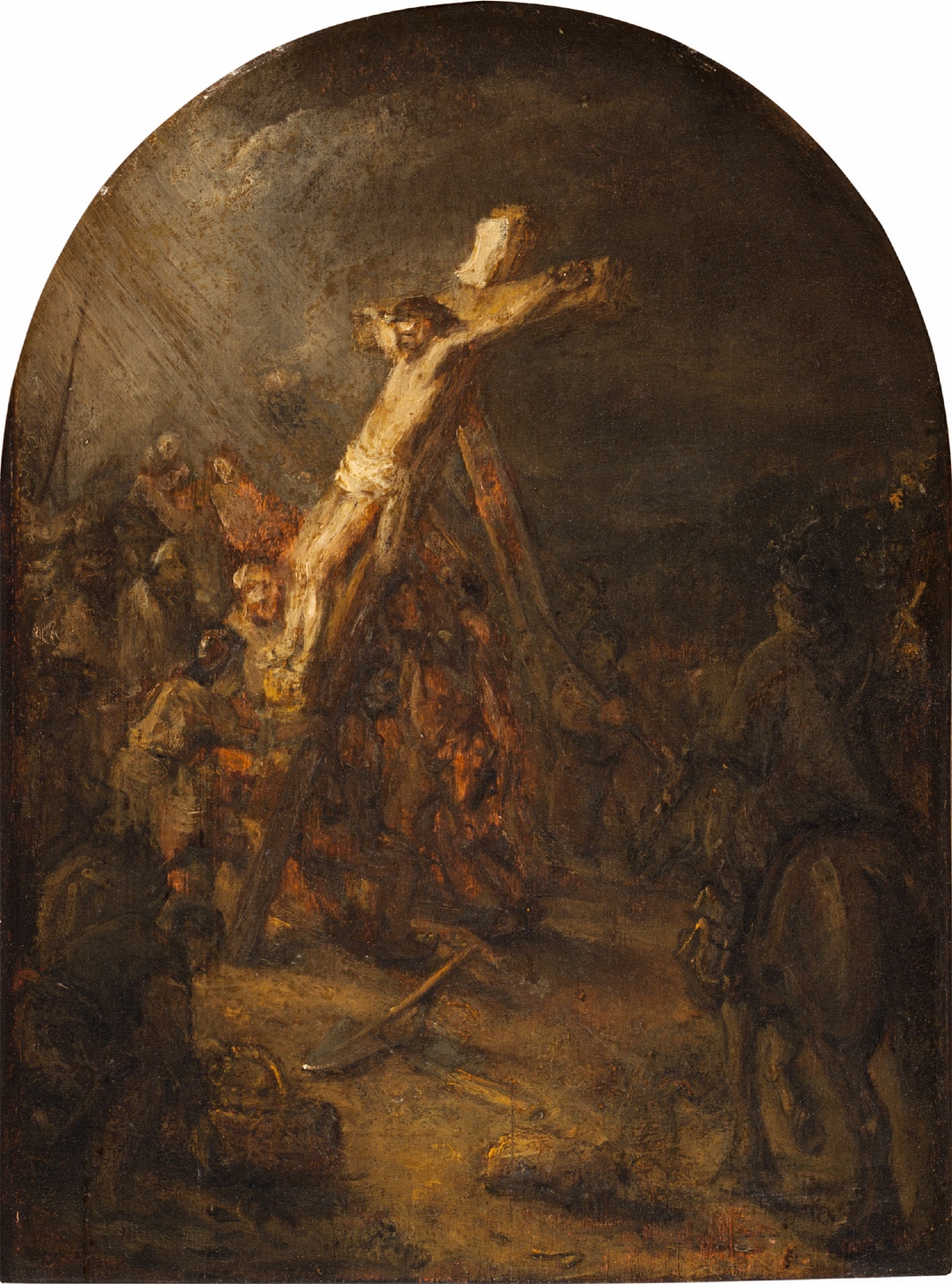
Now, after about two years of analysis, experts are convinced this is an original Rembrandt.
Art historian Jeroen Giltaij, the former chief curator of old paintings at the Boijmans Van Beuningen Museum in Rotterdam, “rediscovered” the sketch while compiling research for an upcoming Big Book of Rembrandt Paintings featuring 684 artworks attributed to the 17th-century painter. He then worked closely with Johanneke Verhave, who restored the work, to study the sketch in detail.
The restorer described the piece as “so well done” it must have been created by the artist himself. Chiming in, Giltaij said the brush strokes were just “brilliant” no matter how many times he looked at the sketch, he told Agence France-Presse (via France24).
As for the “crude” brush strokes under scrutiny by some art experts, Giltaij emphasized that this is a preparatory sketch for a painting, hence the “very rough” details.
It seemed like Rembrandt had put the piece together as a backbone of how the real artwork would turn out.
Modern techniques like infrared reflectography and X-ray scans picked up that Rembrandt had made several tweaks to the work, indicating that the artist kept changing his mind and that the sketch was simply a part of his creative process.
Verhave noted that the brush strokes don’t suggest Rembrandt was copying something.
While the artwork shares its name with another Rembrandt painting, experts don’t believe it was a preparatory drawing for the other Raising of the Cross, which dates back to 1633. The sketch came later.
For an additional opinion, the researchers turned to no other than the Rijksmuseum, which holds the famous Nightwatch. The Amsterdam institution’s own experts also determined the sketch to have been made from Rembrandt’s hand after running it through a technical analysis.
[via AFP / France24 and Reuters, images via Museum Bredius / Wikimedia Commons (public domain)]


