
US Army’s Autonomous Black Hawk Helicopters Fly Rescue Mission Without Humans
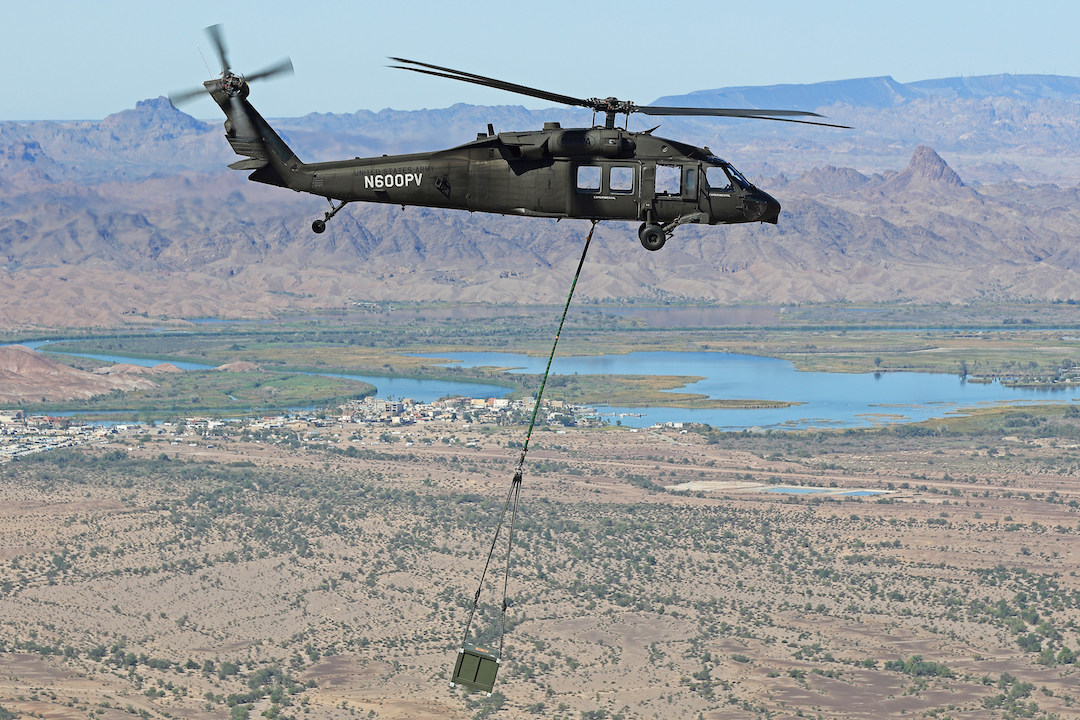
Following a series of test flights by Lockheed Martin subsidiary Sikorsky and the Defense Advanced Research Projects Agency (DARPA), it now appears the US Army’s Black Hawk helicopters can “safely and reliably” fly on their own, without a pilot present at the controls.
On three separate instances last month, the helicopters took off uncrewed, successfully completing internal and external cargo resupply missions, and even a rescue operation. Sikorsky’s technology, dubbed the MATRIX, forms the basis of the autonomous system.
This breakthrough proves that it could soon be possible for such aircraft to fly complex missions with reduced or no crew, opening a multitude of options in how aircraft and pilots are deployed, especially in risky situations.
For example, in one of the test flights, the Black Hawk helicopter demonstrated how it could deliver a large quantity of blood product with no humans onboard, flying low and fast through the terrain to mask its presence.
Not only could it resupply troops with 400 units of real and simulated blood over the course of 83 miles, but it re-routed mid-flight to evacuate a casualty.
The helicopter then lifted off a 2,600-pound external load attached to a 40-foot sling, before flying for half an hour to a designated landing zone, where it safely released the casualty.
“We believe MATRIX technology is ready now for transition to the Army as they look to modernize the enduring helicopter fleet, and acquire Future Vertical Lift aircraft,” quipped Igor Cherepinsky, Director of Sikorsky Innovations.
“Uncrewed or reduced crewed helicopters could safely perform critical and lifesaving missions day or night in complex terrain and in contested battlespace,” he added.
[via New Atlas and Lockheed Martin, cover image via Sikorsky]


