
Oculus Founder Builds VR Headset That Can Kill You IRL If You Die In-Game
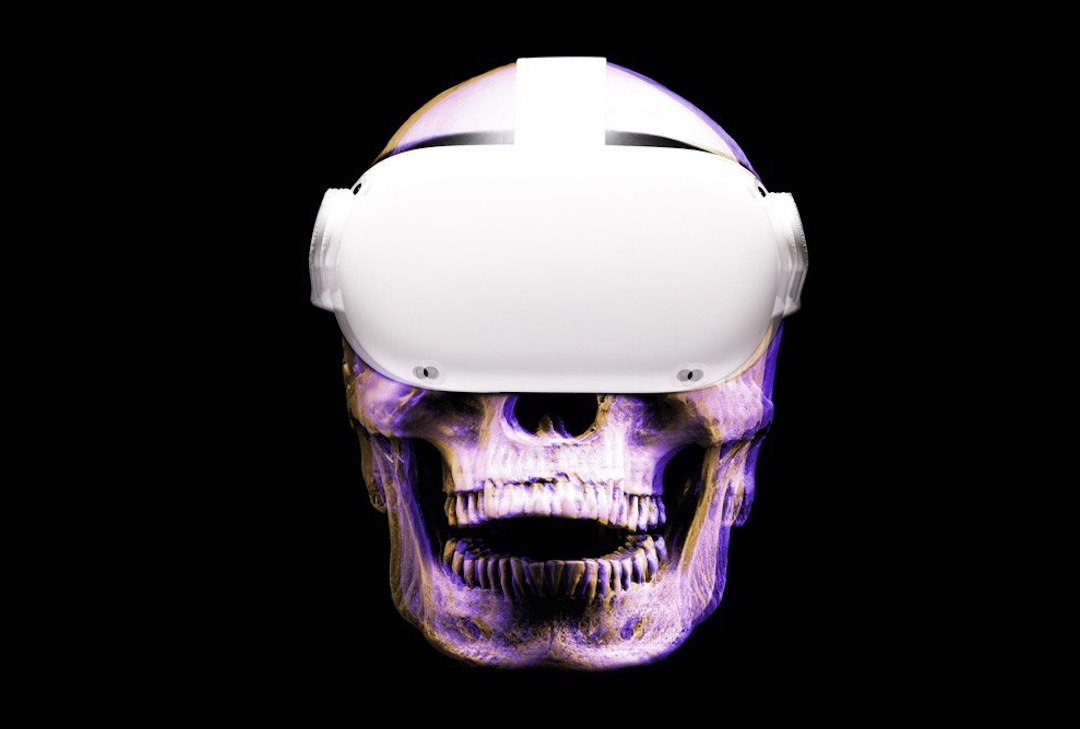
In an unexpected turn of events, Oculus founder Palmer Luckey has claimed to have developed a virtual-reality headset that kills its user if their avatar dies in a game.
According to a blog post, Luckey says he was inspired by the premise of the popular anime Sword Art Online, in which thousands of gamers have found themselves trapped in a game by a mad scientists. The story goes that if their points decline to zero, they’ll be blown up by powerful microwaves via their designated ‘NerveGear’.
Interestingly, Luckey credited the anime with Oculus’ popularity in Japan, which has apparently become the gadget’s second largest market. Many people have reached out to him asking if he’d ever make the ‘NerveGear’ from the series a reality.
That’s how he dreamed up a real-world version of NerveGear that “perfectly recreates reality” using a direct neural interface, so that a user’s real life is tied to their virtual avatar. Instead of copying the microwave emitter from the anime, though, this gadget uses explosive charge modules.
"This might be a game, but it is not something you play."
— Palmer Luckey (@PalmerLuckey) November 6, 2022
To commemorate the Sword Art Online Incident of November 6th 2022, I made the OQPNVG, the first virtual reality device capable of killing the user - if you die in the game, you die in real life.https://t.co/F3nkP5EU61
“When an appropriate game-over screen is displayed, the charges fire, instantly destroying the brain of the user,” Luckey explains.
Luckey says the idea is to “raise the stakes to the maximum level” and change how players think of the virtual world and their interactions in it. While the current “pumped-up graphics” make video games appear more lifelike, there still isn’t the threat of an actual consequence to make them feel “real.”
It seems the developer has gone one step further to think of anti-tamper mechanisms, so once users commit to the challenge, they won’t be able to remove or destroy the headset. Terrifyingly, he admits that “a huge variety of failures” could occur.
As of now, the NerveGear (fortunately) isn’t close to completion. Luckey says it’s “still many years out,” and despite having “figured out the half that kills,” the team has yet to create the virtual reality part of the equation.
“At this point, it is just a piece of office art, a thought-provoking reminder of unexplored avenues in game design. It is also, as far as I know, the first non-fiction example of a VR device that can actually kill the user. It won’t be the last.” Welp.
[via Futurism and Palmer Luckey, cover image via Gudvin05 | Dreamstime.com]


